
Authors
Rosa Santa Serravalle - Senior Researcher Mondo Internazionale G.E.O. Cultura & Società
Simona Chiesa - Senior Researcher Mondo Internazionale G.E.O. Cultura & Società
Abstract
This paper examines the relationship between migration policies and socio-economic outcomes in Europe through a comparative analysis of France, United Kingdom, and Poland.In a context marked by the increasing politicisation of migration and recent policy reforms, particularly the 2024 EU Pact on Migration and Asylum and its subsequent 2026 operationalisation targets the study highlights the structural tension between socio-economic needs and political constraints.
The findings show that migration impacts vary significantly depending on institutional frameworks and labour market structures. While France faces persistent integration challenges, the United Kingdom’s selective system produces uneven socio-economic effects, and Poland’s flexible model supports rapid labour market inclusion but raises concerns about precarity and sustainability. The study concludes that the main challenge for Europe lies in moving beyond reactive and fragmented approaches towards more coherent, sustainable, and inclusive governance strategies capable of integrating migration into long-term economic and social development models.
1. Migration, labour markets and policy responses in Europe
In recent years, migration has increasingly moved to the centre of political and economic debates across Europe. While it has long been recognised as a structural component of demographic change and economic development, its role has become more contested, especially in light of recent policy reforms and shifting public attitudes.
Migration is no longer discussed solely in terms of economic contribution or humanitarian responsibility, but also in relation to its perceived impact on labour markets, public finances, social cohesion, and access to essential resources such as housing (OECD, 2025; European Migration Network, 2025).
To capture the complexity of migration flows, it is useful to consider the role of Frontex, which reported a stabilisation of irregular border crossings in late 2025 following a 38% decline earlier in the year, the European Border and Coast Guard Agency. Frontex monitors irregular migration at the EU’s external borders and produces monthly maps that visualise the pressures along different routes. These maps highlight persistent challenges, such as crossings through the Central Mediterranean and the Western Balkans, while also identifying areas where irregular flows have declined, for instance parts of Western Africa and the Eastern Mediterranean.
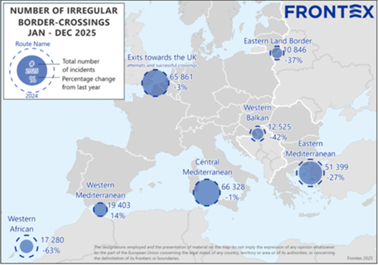
Figure 1: Irregular migration detections and main routes at the EU’s external borders, 2025. Source: Frontex.
The growing politicisation of migration has coincided with a broader transformation in migration governance. The year 2024, in particular, marked a key turning point at both European and national levels. The adoption of the Pact on Migration and Asylum sought to move the European Union towards a more coordinated and structured system, combining solidarity mechanisms with stricter border procedures and enhanced responsibility for frontline states (European Migration Network, 2025). Concurrently, individual countries have introduced national reforms that reflect a common trend: a dual approach aiming to maintain a degree of economic openness, particularly for labour migration, while reinforcing control over irregular movements and limiting access to rights and long-term settlement.
Within this evolving framework, migration policies increasingly reflect a tension between economic needs and political constraints. European economies continue to rely on migrant labour to address shortages in key sectors such as construction, care, and hospitality. Yet governments face growing pressure to curb migration levels, tighten border controls, and respond to public concerns about security, social integration, and welfare sustainability. This tension is visible not only in policy design but also in the broader narratives surrounding migration, which simultaneously frame it as both a resource and a potential burden.
Examining three national contexts, France, United Kingdom, and Poland, helps illustrate how this tension unfolds in practice.
In France, migration management occurs in a context of relatively stable inflows but persistent structural challenges. Recent reforms including the Loi n° 2025-796 of August 11, 2025, which facilitates administrative retention for foreign nationals deemed a threat to public order, attempt to combine selective regularisation with stricter enforcement measures, notably through instruments such as the Obligation to Leave French Territory (Commission des Lois, 2025). At the same time, France continues to face difficulties in integrating migrants into the labour market, reflected in lower employment rates among immigrants and the dominance of family reunification channels (Auriol et al., 2021). Broader socio-economic challenges, including a deepening housing crisis and rising inequality, further compound these integration difficulties (Fondation pour le logement, 2025).
United Kingdom (UK) presents a different, yet equally complex, picture. The May 12, 2025 White Paper, "Restoring Control over the Immigration System", prioritised a graduate-level model by raising the Skilled Worker threshold to RQF Level 6 and doubling the settlement qualifying period to 10 years. However, net migration initially reached historically high levels before declining again under stricter measures (Migration Observatory, 2025). This reflects the interplay between policy reforms and external pressures, such as global mobility trends and labour demand. While research suggests limited overall effects on native employment and wages, the impacts are unevenly distributed, particularly among lower-skilled workers (Dustmann et al., 2013). Restrictive policies, including the “No Recourse to Public Funds” condition, have raised concerns about poverty, social exclusion, and long-term integration outcomes (All-Party Parliamentary Group on Migration, 2024).
Poland, structurally different from France and the UK, has transitioned from a source of emigration to a destination country, offering insights into how migration policies adapt to demographic pressures, labour shortages, and EU-level frameworks. The country’s approach balances humanitarian measures, particularly for Ukrainian refugees, with targeted labour migration pathways and enhanced border management. Policies include temporary protection programmes, streamlined work permits, and stricter regulations for high-skill sectors such as healthcare, reflecting an effort to integrate migrants into the economy while safeguarding national security. The implementation of the European Pact further shapes Poland’s approach, particularly in terms of responsibility-sharing and the management of irregular migration along its eastern borders.
Across these three cases, a common pattern emerges: migration does not produce uniform effects, but interacts with existing economic structures, institutional capacities, and policy choices. While some studies highlight positive contributions, such as addressing labour shortages and supporting innovation (Edo, 2019), others emphasise potential challenges, including labour market segmentation, pressures on public finances, and growing inequality (OID, 2025). These contrasts suggest that the socio-economic impact of migration is not predetermined but contingent upon governance strategies and policy implementation.
Thus, migration policies in Europe are increasingly characterised by internal contradictions. Measures aimed at restricting inflows and limiting access to rights may curb certain types of migration but can also generate unintended consequences, including labour shortages, informal employment, and increased vulnerability among migrant populations. Conversely, policies that promote integration may enhance economic and social outcomes but often face political resistance.
By analysing France, United Kingdom, and Poland within this common framework, this paper seeks to provide a nuanced understanding of migration’s socio-economic consequences. Rather than adopting a purely normative stance, it highlights the trade-offs inherent in migration governance and assesses whether current policies can balance economic efficiency with social sustainability within an increasingly complex European context.
2. Migration and its Socio-Economic Consequences: Three Case Studies
1. France
France has one of the longest traditions of immigration in Europe. In January 2024, it adopted a new immigration law (law n° 2024-42) aimed at strengthening the management of migration flows while improving integration mechanisms.
A key innovation of the reform is the introduction of a more structured regularisation pathway for undocumented workers employed in labour‑shortage sectors. Individuals employed in labour-shortage sectors for at least 12 months over the previous two years, and who have resided in France for a minimum of three years, may now apply independently for legal status, without requiring their employer to initiate the procedure. At the same time, the law reinforced sanctions against employers who hire undocumented migrants, reflecting a dual approach that combines regularisation opportunities with stricter enforcement.
The asylum system was also streamlined. The number of possible legal appeals was reduced from twelve to three to accelerate procedures, while coordination at the local level was strengthened. In parallel, deportation rules were tightened, extending removal possibilities even to foreign nationals who arrived in France before the age of 13. This system was reinforced in April 2024, when France adopted a biometric decree implementing the revised Regulation EU 2024/1358 which introduced the Eurodac system, linking the national fingerprint database with national and European databases to enhance identity verification and cross-border cooperation. These national developments took place alongside broader European trends. In 2024, after the adoption of the law, irregular border crossings into the European Union fell by 38%, dropping to just over 239,000 detections (European Migration Network, 2025). This decline was largely driven by reduced flows along the Central Mediterranean and Western Balkan routes.
At the EU level, 2024 marked a major turning point in migration governance with the adoption of the Pact on Migration and Asylum, which entered into force in June 2024 and will become fully applicable by June 2026. The Pact seeks to establish a more coherent and balanced migration framework, grounded in shared responsibility and solidarity among Member States. It also mandates pre‑entry screening and accelerated border procedures for applicants from countries with low asylum recognition rates, significantly increasing operational responsibilities for frontline states such as France.
What is the Obligation de Quitter le Territoire Français (OQTF)?
The Obligation to Leave French Territory (OQTF), established by the law of 24 July 2006 is the most frequently applied legal measure for removing foreign nationals from France - used more commonly than expulsion or return to the border (Service Publique française, 2024). It applies to non-citizens who have been on French soil for more than three months and meet one or more of the following conditions:
- They have been denied a residence permit or its renewal (including those refused temporary residence or whose asylum claims have been rejected),
- They are in an irregular situation (such as illegal entry, overstaying a visa, or detected during a police check),
- They pose a threat to public order.
Individuals subject to an OQTF may be placed either in an administrative detention centre or under house arrest. While the order can be immediately enforceable, it generally allows the individual 30 days to voluntarily leave the country. The decision can be challenged in administrative court (in which case the appeal suspends enforcement) or, if the person is detained, before a judge of liberties and detention.
The OQTF has become the primary tool for enforcing deportations, replacing previous mechanisms like the Invitation to Leave the Territory (IQTF). An OQTF is issued by the prefect in cases such as:
- Irregular entry or overstaying a visa,
- Expired, withdrawn, or unrenewed residence permits,
- Unauthorised employment (especially within the first 3 months),
- Threats to public order.
Rejected asylum seekers may receive an OQTF within 15 days, while others are typically granted a 30-day deadline to leave voluntarily. This grace period can be shortened or removed if there is a risk of absconding or changes in the individual's situation. In such cases, immediate enforcement may follow, and a re-entry ban (IRTF) can be imposed.
Minors are not directly subject to an OQTF but can be removed with their families. The measure remains enforceable for up to three years. Despite issuing around 140,000 OQTFs annually, only 20,000 to 24,000 are effectively carried out each year, highlighting a persistent gap between administrative decisions and practical implementation. For instance, in 2024, while 33,000 Algerians were in an irregular situation, fewer than 3,000 were removed (Radio France, 2025). These figures highlight the gap between administrative decisions and their practical execution.
Approximately 500,000 foreign nationals are currently estimated to be living in an irregular situation in France, most often in conditions of severe precarity (Commission des Lois, 2025). This raises serious public health, dignity, and security concerns, as recent tragic events have shown. As illustrated in Figure 2, most individuals come from Algeria, followed by Tunisia, Morocco, and Sudan, with an overall increase compared to the previous year, which may be associated with the recent strengthening of national legislation.
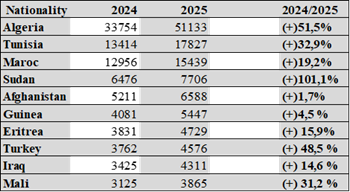
Figure 2: Main nationalities of origin among those apprehended by undocumented immigrants. Source: MI-DGEF/DSED-DCPAF, Ministère de l’intérieur.
The number of OQTFs issued by the French authorities is high compared to neighbouring European countries: around 130,000 per year, compared to 60,000 in Germany, 50,000 in Spain, and 30,000 in Italy, according to Eurostat (Commission des Lois, 2025).
The prefectural authority issues an OQTF (Ceseda, Art. L. 542-1) when:
- the decision of the Office français de protection des réfugiés et apatrides (OFPRA) rejecting an asylum application becomes final because it was not challenged within the prescribed time limits before the Cour nationale du droit d’asile (CNDA),
- upon notification to the person concerned of an order dismissing the appeal (i.e. without a hearing),
- as soon as the CNDA decision is read in session (or publicly posted) when it is issued following a public hearing (Gisty, 2025).
As with any administrative decision constituting a policing measure, an OQTF must state the legal and factual grounds on which it is based. However, when an OQTF accompanies a decision refusing the issuance or renewal of a residence permit, a provisional residence authorisation (APS), a receipt, or the withdrawal of one of these documents, no additional reasoning is required.
Migration and its direct economic consequences
Migration issues, which have been at the centre of public debate for decades, have become even more prominent following the announcement of the 2023 Darmanin-Dussot law (law n° 2024-42), more commonly referred to as the “immigration law”. These debates are part of the political strategy adopted by the far right and a segment of the republican right, who frame migration primarily through identity-based and security-oriented narratives concerns about the impact of immigration on employment and wages, as well as public finances, are also mobilised to justify stricter integration policies and admission policies.
It emerges that France has experienced steady but relatively modest growth in its immigrant population compared to its European neighbours. The foreign population living in France accounted for 8.8% of the total population in 2024. It was just during this year that the number of first-time asylum applicants decreased by 9.8%, reaching approximately 131,000. Most applicants originated from Ukraine (13,000), Afghanistan (10,000), and the Democratic Republic of the Congo (9,300). Of the 138,000 asylum decisions issued in 2024, only 38% resulted in a positive outcome (OCDE, 2025).
Compared to its main OECD partners, France is characterised by immigration largely driven by family reunification, relatively low-skilled profiles, and limited geographical diversity (Auriol et al., 2021). Although overall employment levels may rise, the share of voluntary unemployment among natives may increase when wage expectations are no longer met. Moreover, when downward wage adjustments are constrained (due, for example, to the existence of a minimum wage) labour market adjustment may occur through a reduction in employment rates. When wage declines fail to sufficiently offset productivity losses, only part of the available labour force can be absorbed by firms.
According to a study by the Observatory on Immigration and Demography (OID), the net economic impact of immigration in France is negative, generating an estimated loss of 3.4% of national GDP. Further, the study reported by Le Figaro (2025), highlights that taxes paid by immigrants cover only 86% of the costs they generate for taxpayers. It is because only 62.4% of working-age immigrants are employed, compared to an EU average of 67.5% and 69.5% among native French citizens.
One of the main issues identified by the OID concerns France’s family reunification policy, which promotes immigration not oriented toward labour market integration and produces long-term negative effects on integration outcomes. Based on OECD data, in 2020-2021, 24% of young people born in France to immigrant parents were neither in employment, education, nor training (NEETs), the second-highest rate in Europe after Belgium (Giano, 2025). This high level of youth inactivity is linked to persistent ethnic segregation and weak labour market inclusion.
Concerns about the potential negative economic impact of immigration have long been part of the public discourse. Immigration is often categorised into two broad types: labour migration and international student mobility, which are typically seen as intentional and economically beneficial, as they are designed to meet labour market and educational needs; family reunification and humanitarian migration, which are often viewed as obligatory or externally driven, and are assessed in terms of a country’s capacity to receive and integrate newcomers, thus more frequently perceived as a financial burden.
Certain categories of immigrants face greater barriers to employment, particularly beneficiaries of international protection and women arriving through family reunification with young children. Asylum seekers, who must wait for their claims to be processed by OFPRA, often experience precarious living conditions that hinder access to employment. Once protection is granted, significant support is typically required to facilitate labour market integration, especially when qualifications are not recognised or language proficiency is limited.
According to Nicolas Pouvreau-Monti, director of the OID, immigration tends to “exacerbate the structural problems of employment,” contributing to a vicious cycle marked by deteriorating public finances, slower economic growth, increased tax pressure, and negative effects on strategic productive sectors (Giano, 2025). Although immigration is frequently presented as a response to labour shortages in industries such as hospitality and construction, this approach is often short-sighted, as it may weaken policies designed to enhance the attractiveness of these sectors for French workers.
INSEE data cited by the OID (2025) suggest that immigration does not improve France’s persistently low employment rate and may even worsen it across two generations. As a result, in its current configuration, immigration produces contradictory economic outcomes: while it helps alleviate sector-specific labour shortages, it also risks intensifying macroeconomic imbalances, weakening public finances, and reinforcing France’s underlying structural economic challenges. In particular, immigration mainly benefits sectors sheltered from international competition, such as construction and security, while indirectly penalising exposed sectors like industry due to higher taxation stemming from its negative contribution to public finances.
This assessment, however, is widely debated. A substantial body of economic literature suggests that immigration does not constitute a fiscal burden nor does it negatively affect native workers’ employment or wages (Oberti, 2024). On the contrary, many studies highlight immigration’s contribution to innovation, productivity, and long-term economic dynamism, suggesting that its impact depends heavily on governance strategies and integration policies.
Political stagnation and housing inequality
As reported in Dubasque (2025), France is going through a period marked by political indifference to the housing crisis. Despite repeated warnings about the worsening living conditions, public policies have remained largely reactive and insufficient, prioritising repressive measures against tenants unable to pay rent rather than addressing structural causes. The analysis denounces this approach, stressing that inadequate housing is not only a matter of human dignity, but also a factor that exacerbates social and economic inequalities.
In 2024, 735 people died on the streets, the highest number recorded over the past twelve years by the Collectif Les Morts de la Rue (Fondation pour le logement, 2025). The dramatic situation is further aggravated by climate change and the continuous rise in the number of applicants for social housing. By mid-2024, this figure had reached a record 2.7 million people, compared to 2.1 million in 2017. This increase reflects a growing mismatch between demand and the limited supply of affordable housing. Only 82,000 social housing units financed in 2023, far below the 124,000 recorded in 2016 (Dubasque, 2025) .
An estimated 350,000 people are homeless in France, alongside 11.2 million living in monetary poverty (Fondation pour le logement, 2025). People living on the street are particularly vulnerable: with an average age of 49, 735 individuals died while homeless in 2024, the highest number ever recorded. These figures underscore the severity of the crisis and the inadequacy of current policy responses.
Because housing has not been recognised as a policy priority, it has ultimately been neglected, as illustrated by the decline in public spending on housing, which fell from 2.2% of GDP in 2010 to 1.5% in 2023, according to housing accounts (Fondation pour le logement, 2025).
Figure 3 highlights the structural depth and multidimensional nature of the housing crisis: more than 6.4 million households, representing over 16 million individuals, are affected by at least one form of housing deprivation, ranging from excessive housing-related financial burdens to overcrowded and inadequate living conditions. This demonstrates that housing insecurity extends far beyond homelessness, affecting a broad segment of the population.
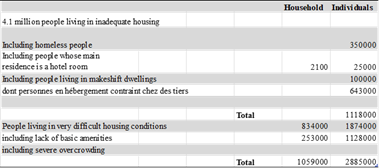
Figure 3: 30e rapport sur l’état du mal-logement en France 2025. Source: Fondation pour le logement (2025).
Figure 4 further underscores the unequal social impact of the housing crisis. Individuals originating from Africa and Europe are disproportionately represented, suggesting that housing vulnerability is closely intertwined with migration trajectories, socioeconomic inequalities, and legal status. In this context, housing insecurity appears not merely as a consequence of market dynamics, but as the outcome of structural inequalities and policy choices, including insufficient public investment and fragmented social protection mechanisms.
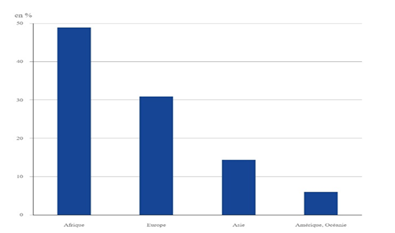
Figure 4: Estimations de population. Source (INSEE, 2026).
2. United Kingdom
The UK’s post-Brexit immigration system came into force in January 2021, marking the end of the free movement of people between the UK and European Economic Area (EEA) citizens. At the time, the government expected that net migration, the difference between the number of people arriving and the number leaving, would fall. However, subsequent trends diverged sharply from these expectations.
Net migration reached historic highs in 2023, peaking at 906,000 (Migration Observatory, 2025). It dropped sharply in 2024 to 431,000, but remains higher than the levels of 250,000-350,000 commonly seen during the 2010s. This fluctuation reflects the combined effects of post-pandemic mobility, labour market pressures and successive policy adjustments introduced by the Conservative government.
A large body of research has found that migration has at most a small impact on the employment and wages of UK-born workers (Migration Advisory Committee, 2018). But these impacts are uneven: the lowest-paid workers tend to ‘lose out’, while the highest-paid stand to gain. This is because, after arrival, some migrants ‘downgrade’ and work in jobs towards the bottom of the earnings distribution (e.g., due to difficulty getting foreign qualifications recognised). That puts them in closer competition with lower-paid UK-born workers (Dustmann et al., 2013).
In 2023, net migration reached historic highs, peaking at 906,000 (Migration Observatory, 2025). It dropped sharply in 2024, to 431,000, but remains higher than the levels seen during the 2010s. The decline occured after the Conservative government introduced a range of measures to reduce immigration. These included: visa restrictions on the family members of care workers and most international students, increasing Home Office scrutiny of applications to sponsor migrant care workers, after widespread reports of exploitation in the care sector. Unlike the labour market, where the number of jobs can grow relatively quickly following an increase in the population, it takes longer for the UK to increase its housing stock. This is why the evidence generally suggests that migration has contributed to higher house prices.
White Paper reforms
The 2025 Immigration White Paper (Home Office, 2025) introduces a wide range of measures, most of which aim to restrict migration, with a few symbolic liberalisations. The UK’s main long‑term work visa (the Skilled Worker Route) will now be largely limited to graduate‑level roles. While the exact new salary threshold has not yet been specified, it will be raised substantially, narrowing eligibility. Middle-skilled occupations, such as those in construction, will only be eligible for temporary visas under strict conditions, and workers in these roles will not be allowed to bring dependents. The care worker visa will be closed to new overseas applicants, although individuals already in the UK on visas that permit work will be allowed to switch into the care route until 2028. The duration of the post‑study graduate visa will be reduced from two years to 18 months, significantly shortening the period during which international graduates may remain in the UK to work after completing their studies. In addition, partners accompanying visa holders will need to demonstrate basic English proficiency, and the White Paper outlines plans to raise English language requirements across the entire immigration system, including for settlement applications. For the first time, adult dependents of work visa holders would also be subject to language standards.
The government has also signalled future reforms in family migration, including proposed legislation that will attempt to restrict the number of people being granted status under human rights laws despite not meeting the main immigration rules. The White Paper also signals plans to try to restrict people on visas from applying for asylum, although most of the details remain to be seen.
As reported by OECD (2025), in 2024 UK admitted approximately 436,000 new long-term or permanent immigrants (including status changes and movements under free mobility), marking a 41% decrease compared to 2023. Of these, 27% were labour migrants, 60% were family members (including accompanying relatives), and 9% entered for humanitarian reasons. Additionally, about 384,000 permits were issued to tertiary-level international students, and 102,800 to temporary and seasonal labour migrants (excluding intra-EU migration).
The government’s efforts to reduce previously high net migration levels by strengthening border controls and tackling irregular migration. The decline in 2024 was driven primarily by fewer arrivals from non‑EU+ countries, particularly due to reductions in work and study visas, combined with higher emigration levels, including many former international students leaving after the easing of pandemic, related travel restrictions.
Another proposed change to the current framework would allow for the return of asylum seekers from countries that, within the 30 months following the submission of their application, are once again deemed safe by the Government. On the diplomatic front, the government has recently stated that countries refusing to readmit their nationals when requested may face diplomatic measures, such as visa restrictions. Attention has been directed at several African states, including Angola, Namibia, and the Democratic Republic of Congo. This announcement comes at a sensitive moment for England, marked by increasing governmental instability and a rise in immigration levels of 17% compared to 2024 (Urso, 2025).
In April 2023, a study conducted by Richards et al. (2025) concerning several interviews done to young individuals, demonstrated that 52% thought that immigration numbers should be reduced. The level of opposition varies by the type of question, and fewer people (32%) said that immigration was a bad or very bad thing.
Concern about immigration declined after the 2016 Brexit Referendum, but salience rose from late 2022 to late 2024 and was the top ‘most important issue’ (at 38%) in October 2024 for the first time since 2016 (Richards et al., 2025). British people make clear distinctions between types of migrants, with the highly skilled preferred to unskilled overall, and the majority in favour of making immigration easier for health care workers. Younger people and people with university degrees tend to express more positive attitudes to immigration, and Labour voters tend to express more positive attitudes than Conservative voters.
The Government’s approach to irregular and illegal migration is clear - robust enforcement against those who do not respect the rules, those who facilitate and exploit that rule-breaking and the foreign criminals who present a danger to the public (Home Office, 2025).
The government should work to end destitution by addressing it directly within the social security and immigration systems, making poverty reduction a key policy goal and supporting migrants’ integration and contribution to society. Severe poverty increases people’s exposure to exploitation by criminal groups and unethical employers, harming overall community safety, while policies that shift costs to local authorities or communities are inefficient and hide the real impact of government decisions. As All-Party Parliamentary Group on Migration (2024) reported, poverty in the United Kingdom has remained high since 2010 and has risen again in recent years: in 2022/23, more than one in five people (roughly 14.3 m people) were living in poverty, with particularly high rates among families with children and some minority ethnic groups, often linked to experiences of discrimination and migration policies.
Regarding the work reforms outlined in the White Paper, the skilled worker threshold will be raised back to RQF level 6 and above. Salary thresholds will increase, and the Immigration Skills Charge, unchanged since its introduction in 2017, will rise by 32% in line with inflation. Additionally, social care visas will be closed to new applications from abroad.
An inability to access employment can also have longer-term impacts, as well as broader implications for people’s confidence and employability. This means that exclusion from the labour market for a period may increase the risk of unemployment, low pay and poverty even once the right to work is obtained. Migrants in the UK may encounter several obstacles in the labour market that increase their risk of poverty through unemployment or low wages. These barriers include visa rules that restrict job mobility, such as sponsorship requirements, which can weaken migrants’ ability to negotiate fair pay and working conditions and expose them to exploitation, including breaches of minimum wage laws. Limited access to training opportunities, particularly English language courses, can prevent migrants from improving their skills and earnings over time, keeping them in low-skilled, low-paid jobs. In addition, the complex and costly process of recognising foreign qualifications in the UK often prevents migrants from accessing skilled employment, forcing many into lower-paid work.
Socio-economic consequences of migration restrictions
Millions of people residing in the United Kingdom with temporary leave to remain, estimated at 2.6 million at the end of 2022, are subject to No Recourse to Public Funds (NRPF) conditions. These restrictions apply to individuals who have entered the UK for work, study, or family reunification and prevent access to most social security benefits, welfare support, and social housing (All-Party Parliamentary Group on Migration, 2024). Families subject to NRPF conditions are excluded from Child Benefit and other child-related social security payments, and many were unable to access the financial support measures introduced during the COVID-19 pandemic and the subsequent cost-of-living crisis. As a result, NRPF policies continue to entrench socioeconomic disadvantage and disproportionately affect children within migrant households.
Individuals residing in the UK with irregular migration status, a population estimated to number in the hundreds of thousands, are effectively subject to the same exclusions by default. While support provided by local authorities can represent a vital safety net for people with NRPF conditions, the level of assistance offered is typically significantly lower than that available through mainstream social security benefits.
In the education and social care sectors, children are legally entitled to access compulsory education up to the age of 18 and social care services regardless of their immigration status (All-Party Parliamentary Group on Migration, 2024). For children living in poverty, schools often provide an essential source of stability, nutrition, and support. The recent decision to permanently extend eligibility for free school meals to children subject to NRPF conditions represents a positive development, enabling schools to access related funding such as the pupil premium. Nevertheless, certain groups of migrant children continue to face barriers to full and effective access to education.
While the overall impact on the labour market and public finances is expected to be modest, the effects on housing remain more uncertain. The consequences of additional policy reforms aimed at reducing demand for migrant labour are also difficult to assess. Predicting the outcomes of immigration policy changes is inherently complex, but the increase in net migration was not unexpected. During the 2010s, EU citizens were the primary source of inward migration, and the new system introduced much stricter rules for them, whereas the rules were also more liberal towards non-EU citizens. Fast forward to 2025, and the picture looks rather different.
Many of the challenges faced by low-income migrant households mirror those experienced by low-income UK-born households, including a chronic shortage of social and council housing, housing benefit levels that have failed to keep pace with rising costs, insecure and poor-quality accommodation in the private rental sector, and house prices that remain unaffordable for a large share of the population. Poor-quality or unstable housing conditions not only reflect poverty but also contribute to its persistence and deepening.
Financial insecurity further increases the risk of falling into irregular migration status, particularly for individuals unable to afford the high fees required to renew their leave to remain. Transitioning into irregular status exposes individuals and families to heightened vulnerability, prolonged poverty, and severely restricted access to rights and entitlements.
The inadequacy of asylum support, especially for families with young children placed in Home Office accommodation, has been highlighted through lived experiences. For instance, housing in a hotel prevents them from cooking appropriate food for their infant and that the limited financial allowance is insufficient to cover essential costs such as transport and child-related expenses (All-Party Parliamentary Group on Migration, 2024).
Immigration and labour market policy
Immigration has long played a central role in the United Kingdom’s social, economic, and cultural development. For centuries, migrants have contributed to economic growth and social cohesion, helping to rebuild the country after major shocks such as the Second World War. The UK has also historically provided refuge to people fleeing violence and persecution, from Ugandan Asians to more recent arrivals from Ukraine (Home Office, 2025).
In recent years, however, the effective control and management of the immigration system have increasingly been called into question. While public and political attention has focused primarily on the rise in irregular Channel crossings, peaking at 45,744 small boat arrivals in 2022, far less scrutiny has been given to the sharp growth in legal net migration.
For an extended period, labour market policy and immigration policy have not been addressed in a coordinated or comprehensive manner. This lack of integration has contributed to reduced investment in skills, rising economic inactivity among the domestic workforce, weak long-term workforce planning, and an increasing reliance on recruitment from abroad. At a time when skills are increasingly central to economic competitiveness and employment prospects, employer-led training has declined and public investment in adult education has been cut.
Until the reforms announced by the Secretary of State for Work and Pensions in 2024, there was no comprehensive strategy to expand the domestic labour supply or to support inactive individuals back into employment. A dysfunctional welfare system and limited policy intervention have contributed to persistently high levels of inactivity, with one in eight young people not in employment, education, or training and approximately 9.2 million people classified as economically inactive (Home Office, 2025).
In the absence of coordinated action across the three core pillars of labour market policy (participation, skills development, and industrial strategy) the policy burden has increasingly shifted to a fourth pillar: migration. As a result, immigration has been used as a substitute for sustained domestic workforce development rather than as a complementary tool within a broader economic strategy.
Within this framework, the Home Office (2025) highlights the role of the Regulated Qualifications Framework (RQF), which classifies occupations according to skill level. Roles requiring RQF level 6 or above, such as architects and physiotherapists, are considered highly skilled, while lower-level occupations typically require shorter training periods. Recent reforms to the Skilled Worker visa have lowered the minimum skill threshold from RQF level 6 to RQF level 3, significantly expanding eligibility.
Effective immigration control remains essential across all migration categories, not only for work and study. Although economic migration accounts for the largest share of inflows, family reunification, short-term visits, and humanitarian protection also play a significant role. To improve border management and enforcement, the UK is transitioning to digital identity systems, including eVisas and enhanced visa compliance checks, replacing Biometric Residence Permits. These systems aim to track individuals’ entry, exit, and visa compliance more effectively, enabling upstream interventions such as travel refusals for individuals deemed to pose a risk (Home Office, 2025).
During a transitional period extending to 2028, individuals already in the UK with work rights will be permitted to extend or switch visas, subject to ongoing review. Reforms also allow a limited number of UNHCR-recognised refugees and displaced persons with relevant skills to access employment through existing skilled worker routes. In parallel, targeted measures aim to attract highly skilled global talent, including raising language requirements for Skilled Workers from B1 to B2 under the Common European Framework of Reference for Languages (CEFR).
3. Poland
Over the past decade, Poland has undergone a significant transformation in its migration profile, shifting from a country traditionally associated with emigration to one increasingly characterised by immigration. This transition has been driven by a combination of structural labour shortages, sustained economic growth, and, more recently, geopolitical developments in Eastern Europe. In particular, the Russian invasion of Ukraine has represented a critical turning point, accelerating existing trends and placing Poland at the centre of European migration dynamics (OECD, 2025; European Migration Network, 2024).
Compared to more established destination countries such as France and the United Kingdom, Poland’s migration system has developed rapidly and, to a certain extent, reactively. While France has historically relied on relatively stable, family-based migration flows, and the United Kingdom has implemented a selective, points-based system following Brexit, Poland has adopted a more flexible and adaptive approach, largely shaped by immediate economic needs and external pressures (OECD, 2025). This rapid transformation has required the development of governance mechanisms capable of addressing both short-term humanitarian challenges and longer-term labour market demands.
A defining feature of Poland’s migration framework is the central role of temporary protection combined with facilitated access to employment. Following the outbreak of the war in Ukraine, Polish authorities introduced large-scale protection measures granting displaced individuals immediate access to the labour market, healthcare, and education. This approach contrasts with the more procedural asylum systems observed in Western Europe, where access to employment is often delayed by administrative processes. In the Polish case, the priority has been rapid economic inclusion, reflecting both humanitarian considerations and the urgent need to address labour shortages (European Migration Network, 2024; OECD, 2025).
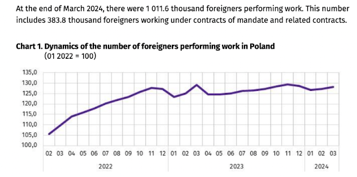
Figure 5. Dynamics of foreign workers in Poland (2022 = 100). Source: Statistics Poland (GUS; 2024).
The growing importance of migrant labour is clearly reflected in recent labour market data. By May 2025, approximately 1.07 million foreign workers were active in the Polish economy, representing around 6.5% of total employment (Statistics Poland, 2025). This marks a steady increase compared to previous years and confirms that migration is no longer a marginal phenomenon but an integral component of Poland’s economic structure. As illustrated in Figure 5, the number of foreign workers has expanded significantly over time, particularly in the post-2022 period, highlighting the structural shift towards a more migration-dependent labour market.
However, the structure of migrant employment reveals important underlying dynamics. A substantial proportion of foreign workers are employed under flexible contractual arrangements, particularly civil law contracts (umowy cywilnoprawne), which are widely used in sectors such as construction, agriculture, and services. In May 2025 alone, over 400,000 foreign workers were employed exclusively under such arrangements (Statistics Poland, 2025). While these contracts facilitate rapid labour market entry and provide employers with a high degree of flexibility, they also raise concerns regarding job stability, social protection, and long-term integration. In this respect, Poland differs from countries such as France, where labour market access may be more regulated but employment conditions tend to offer stronger protections once entry is secured.
Another key characteristic of Poland’s migration landscape is the strong concentration of migrants by nationality. Ukrainian citizens constitute by far the largest group of foreign workers, accounting for approximately 66–67% of the total (Statistics Poland, 2025). Although this share has slightly declined in recent years, reflecting a gradual diversification of inflows, Poland remains heavily dependent on a single country of origin. As shown in Figure 7, other significant groups include citizens of Belarus, Georgia, India, and Nepal, indicating an increasingly diversified but still regionally concentrated migration pattern.
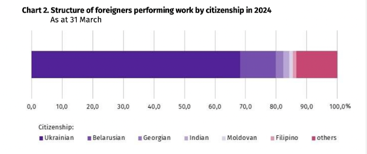
Figure 7. Foreign workers in Poland by citizenship. Source: Statistics Poland (GUS, 2024–2025).
This concentration creates both advantages and vulnerabilities. On the one hand, geographic proximity, cultural similarities, and partial linguistic compatibility facilitate relatively smooth labour market integration for Ukrainian workers. On the other hand, this dependence exposes the Polish labour market to external shocks, particularly those related to geopolitical instability in Eastern Europe. In this sense, migration patterns in Poland are closely intertwined with broader regional dynamics, making the system particularly sensitive to external developments (European Migration Network, 2025).
From a socio-economic perspective, the effects of this migration model are multifaceted. On the positive side, migrant labour has played a crucial role in sustaining economic growth and addressing persistent labour shortages. In sectors where domestic labour supply is insufficient, the availability of foreign workers has enabled firms to maintain production levels and remain competitive. This dynamic is particularly relevant in the context of Poland’s ageing population and declining workforce, where migration helps mitigate demographic pressures and supports economic expansion (OECD, 2025).
At the same time, however, the increasing reliance on migrant labour raises important questions regarding long-term economic sustainability. The availability of a flexible and relatively low-cost workforce may reduce incentives for firms to invest in technological innovation, productivity improvements, and workforce training. Similar concerns have been raised in other European contexts, including the United Kingdom, where migration has at times functioned as a substitute for broader labour market reforms rather than as a complement to them (Migration Observatory, 2025). Poland’s experience thus reflects a broader structural dilemma: migration can alleviate immediate labour shortages while potentially delaying necessary economic adjustments.
Moreover, the concentration of migrants in specific sectors and forms of employment contributes to labour market segmentation. Foreign workers are often overrepresented in lower-paid, less secure jobs, with limited opportunities for upward mobility. This segmentation can reinforce existing inequalities and hinder long-term integration, particularly if migrants remain confined to precarious employment trajectories (OECD, 2025). While Poland has been effective in facilitating rapid access to employment, ensuring job quality and social inclusion remains a significant challenge.
Beyond the labour market, migration has also generated increasing pressure on local infrastructure and public services. Urban areas, particularly Warsaw and other major cities, have experienced growing demand for housing, education, and healthcare. According to recent data, a significant share of foreign workers is concentrated in metropolitan regions, with approximately one in five residing in the Warsaw area (Statistics Poland, 2025). Although Poland has implemented a range of integration measures, including language training and access to essential services, the scale and speed of recent inflows have tested institutional capacity. In this respect, Poland shares certain similarities with France, where structural constraints (particularly in the housing sector) have amplified the socio-economic challenges associated with migration.
At the same time, Poland’s migration governance has become increasingly securitised, particularly along its eastern border with Belarus. In response to what has been widely described as the instrumentalisation of migration flows, the government has implemented stricter border controls and established buffer zones aimed at limiting irregular crossings (European Commission, 2025). These measures reflect a broader European trend, in which migration is framed not only as a socio-economic issue but also as a matter of national security and geopolitical stability.
This dual approach, combining openness to labour migration with restrictive measures against irregular migration, mirrors broader developments across Europe. However, Poland’s model remains distinctive in its emphasis on rapid labour market integration and policy flexibility. While France relies more heavily on formal legal procedures and the United Kingdom on selective admission criteria, Poland has adopted a pragmatic approach that prioritises economic functionality and short-term adaptability (OECD, 2025).
Nevertheless, this model is characterised by internal tensions. The coexistence of inclusive labour market policies and restrictive border practices highlights the contradictions inherent in migration governance. Efforts to facilitate economic participation may coexist with policies that increase precarity or limit access to protection for certain groups. These tensions reflect the broader challenge faced by European states in balancing economic needs, social cohesion, and security concerns.
In this context, Poland provides a particularly relevant case study for understanding the evolving nature of migration governance in Europe. Its experience demonstrates how states can respond rapidly to large-scale migration shocks while leveraging migration as an economic resource. At the same time, it underscores the importance of developing more sustainable and coherent policy frameworks that address not only access to employment, but also job quality, social inclusion, and long-term demographic challenges.
Overall, Poland’s migration trajectory highlights the complex interplay between economic demand, demographic change, and geopolitical pressures. While the country has successfully integrated large numbers of migrants into its labour market, the long-term sustainability of this model will depend on its ability to move beyond short-term flexibility towards more stable and inclusive forms of integration. In this sense, Poland’s experience reflects both the opportunities and the structural challenges that define contemporary migration governance in Europe (OECD, 2025; European Commission, 2025).