
Narcocorridos: Debate on Freedom of Expression in Mexico
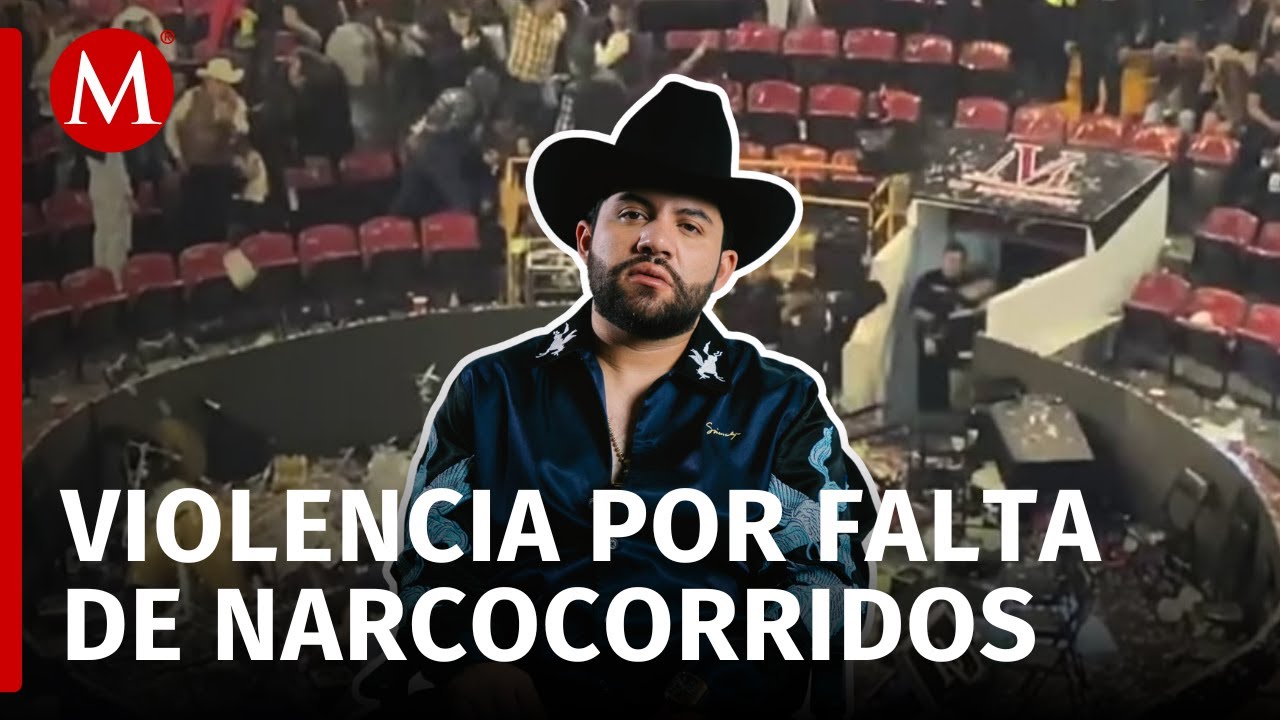
The debate over narcocorridos has resurfaced in Mexico, not only due to their controversial celebration of drug traffickers but also because of recent legislative actions against them. One incident that revived the public debate was the concert of Luis R. Conriquez, one of the leading artists of the genre, who was forced to modify his songs to comply with local regulations that prohibit the glorification of crime. During a performance at the Feria del Caballo in Texcoco, near Mexico City, the artist had to announce that he could not perform his most popular songs, those that tell the stories of drug cartel leaders. This situation sparked a violent reaction from the audience, who booed and threw objects at the singer, forcing him to leave the stage. The incident raised questions about the line between censorship and freedom of expression and highlighted how laws against narcocorridos are affecting the Mexican music scene, polarizing public opinion.
A Brief Introduction to the Phenomenon of Narcocorridos
The narcocorrido is a musical subgenre that has deeper roots than one might think. While its rise occurred in the 1970s – when Mexico became a major transit point for drugs destined for the United States – its origins date back to the War of Independence and the Mexican Revolution. Since the 19th century, this musical genre has been used to tell stories of heroism and social struggles, but in recent decades it has evolved to reflect the reality of drug trafficking and its implications.
Today, the narcocorrido has fused with other musical genres like trap and reggaeton, spreading globally, especially through artists like Peso Pluma. The songs have become increasingly explicit, as demonstrated by the lyrics of Los Alegres del Barranco, who not only celebrate drug traffickers but also portray them visually, as seen in their controversial concert where they projected images of El Mencho, leader of the Jalisco Cartel (CJNG), provoking strong indignation. Despite enjoying significant commercial success, narcocorridos are widely criticized for romanticizing crime and fueling a culture of violence and inequality.

The Intervention of President Claudia Sheinbaum
Despite some states like Jalisco and Estado de México banning narcocorrido concerts, President Claudia Sheinbaum has taken a clear stance, stating that the federal government does not intend to ban the musical genre, but rather to encourage a shift in the direction of its content. According to Sheinbaum, the goal is to prevent the lyrics of songs from glorifying violence, drugs, and misogyny, while promoting music that favours more positive and socially responsible values. In response to growing social concern, the president emphasized that this is not an issue of censorship, which she would consider "absurd," but of fostering greater collective awareness.
Luis R. Conriquez's case is emblematic of this tension between freedom of expression and laws against the exaltation of criminals. His decision to modify the lyrics of his songs to avoid references to drug traffickers signals how the Mexican music scene is trying to adapt to these new regulatory realities. However, the audience’s reaction to his change highlights how, for many young people, music that celebrates drug traffickers represents a symbol of resistance and hope, a way to tell the hardships and injustices of a society deeply marked by poverty and violence.

Narcocorridos and Women's Rights
An often ignored aspect in the debate on narcocorridos is the role of women. These songs tend to marginalize women, treating them as objects or victims. This reflects a patriarchal view that permeates not only music but also Mexican society as a whole. The glorification of male violence in narcocorridos contributes to fostering a culture that excludes women, often depicting them as mere spectators or as victims of violence they cannot control.
Moreover, the glorification of male figures like El Mencho or El Chapo helps reinforce the idea that drug trafficking is a domain exclusively for men. Even when women actively participate in this context, they are rarely represented as protagonists. This strengthens gender stereotypes, relegating women to marginal roles and contributing to the perpetuation of gender inequality.
As sociologist José Manuel Valenzuela points out, narcocorridos reflect social inequalities in the country, where drug trafficking may seem like the only way out for many young people, both men and women, living in extreme poverty. In such a scenario, they could be seen as yet another tool that normalizes a culture of violence and discrimination, especially against women.
Conclusions
The debate on narcocorridos represents a difficult challenge between respecting artistic freedom and the need to protect the fundamental rights of citizens, particularly women and victims of violence. In the long term, rather than banning narcocorridos, it would be more useful to promote a critical discussion about the music, helping young people understand the context of the songs without ignoring the serious social and political implications they convey. Only in this way can we hope to transform part of popular culture into a tool for awareness, not incitement to violence.
Translated by Gaia Ciceri
Mondo Internazionale APS - Riproduzione Riservata ® 2025
Share the post
L'Autore
Gaia Ciceri
Categories
Tag
mexico cocaina narcotraffico narcocorrido Sheinbaum