
Translated by. Chiara Lamedica
Tuzla, Eastern Bosnia
"I buried my dreams here", reads a black-and-white poster hanging on the wall. Beside it are photographs of young men, smiling in the last pictures ever taken of them alive. They are the final traces left behind before attempting to cross the Drina or the Sava—the two natural blue borders separating Bosnia from Serbia to the east and Croatia to the north. A thin and arbitrary boundary between life and death.
"Refugees Welcome": Forms of Resistance
"Since the beginning of May, eleven people have died in the rivers along the borders with Croatia and Serbia," says Nihad, an activist from Tuzla and founder of Djeluj.ba, as he welcomes us to the association's office.
Eleven people disappeared in little more than a month along the deadly borders of “Fortress Europe”. They left their bodies here, often without even a name. “N.N.”, No Name, carved into wooden or marble gravestones, is the only trace that remains of their lives and dreams. The absence of identification allows for an accelerated procedure: without a name, there is no family to contact or to whom the remains can be returned.
They buried their dreams here while trying to reach Europe. That cruel fortress which presents itself as the home of rights and the cradle of civilisation, yet more often breaks backs and destroys futures. Europe is built on charters of rights and humanitarian conventions, yet these are violently enforced against the bodies of migrants at its borders. It is a violence that is often institutional and institutionalised, produced by a system that creates irregularity and is intrinsically violent: towards workers, towards nature, towards ecosystems—and towards people on the move.
Nihad Suljić is the activist who, together with a network of local and international volunteers, including those from Along the Balkan Route, has for years provided support and assistance to people on the move crossing these lands. In 2025, he founded Djeluj.ba, an association based in Tuzla (https://djeluj.ba/).
"We want to transform the experiences of war, loss and poverty into the strength of unity and solidarity," Nihad explains. "That is why we connect what appears impossible to connect: we work in hospitals, cemeteries, universities, refugee camps and public parks. Our goal is to demonstrate that solidarity knows no borders."
The Balkan Route
In 2018, Tuzla became one of the first reception points—and a major hub along the Balkan Route—for people arriving in Bosnia and Herzegovina after a long and dangerous journey, just a step away from the borders of the European Union. Throughout that year, the country officially recorded 24,067 arrivals of migrants and refugees, a dramatic increase compared with just 755 arrivals registered during the whole of 2017.
"People arrived and slept on the streets. We had no idea what migration was or what we were supposed to do," Nihad recalls. "There were people in need, so we started cooking for them and distributing food." Yet that initial solidarity soon gave way to anti-migrant propaganda. "Every day, dozens, sometimes hundreds, of exhausted, freezing people arrived after walking thousands of kilometres. At that time," Nihad continues, "there was virtually no institutional response. Most of the support came from the local community and the people of Tuzla."
The Balkan Route is not the only path leading to Europe. By land and by sea, tens of thousands of people have crossed, or attempted to cross, the borders of the European Union in recent years, paying an extraordinarily high price, often with their lives.
"One of our most important tasks is searching for people on the move who have disappeared along Bosnia and Herzegovina's borders." In 2025, Djeluj.ba launched the country's first official process to identify deceased refugees and migrants in cooperation with the International Commission on Missing Persons (ICMP). "In this way," Nihad explains, "we preserve the dignity of every individual while reminding society of the value of human life, solidarity and responsibility." The first 36 DNA samples have already been sent to the ICMP laboratory in The Hague, marking the first large-scale organised identification process for refugees and migrants ever carried out in Europe.
Faster Returns, Longer Detention
On 12 June 2026, the day we meet Nihad in Tuzla, the new Pact on Migration and Asylum also enters into force. According to the European Council on Refugees and Exiles (ECRE), its implementation has been uneven across Member States and heavily skewed towards restrictive measures, at the expense of safeguards for asylum seekers.
The Pact consists of ten binding legislative acts that reshape how the European Union manages its external borders, processes asylum applications and allocates responsibilities among Member States. Among the main concerns raised are the new border screening procedure, often entrusted to police officers and border guards who are not adequately trained to identify vulnerabilities, and the shortage of qualified personnel needed to implement the new procedures and the protections they are meant to guarantee.
There are also concerns about uncertainties surrounding the new legal assistance system, the persistent shortcomings of reception systems and the restrictions on the right to an effective appeal, all of which could increase the risk of unjustified deportations.
From now on, Member States will also be able to conclude agreements with "safe third countries" outside the European Union. This means that an EU country may refuse to examine an asylum application and instead transfer the applicant to a non-EU country with which they may have no cultural, family or social ties, and where their prospects for protection and integration may be highly uncertain.
The reforms, however, do not address the dysfunctional relationship between EU Member States. Rules remain in place that place a disproportionate responsibility for asylum seekers on countries located along the Union's external borders. The new "solidarity mechanism," Human Rights Watch warns, "will allow states to deny access to asylum while financing border fences, razor wire and surveillance systems instead."
ECRE has also highlighted "delays in establishing the independent monitoring mechanisms required under the Pact, as well as the exclusion of civil society organisations from oversight processes." As a result, the implementation of the new rules risks further weakening the safeguards available to people seeking international protection.
What is emerging is a legal framework that appears more concerned with shifting state responsibility than with ensuring effective protection for people on the move, who continue to face the risk of being pushed back, detained or left to die. "They died because they had the wrong identity. Yesterday, during the war and the genocide of Bosnian Muslims, and today as well: people die because they have the wrong identity or the wrong passport to cross a border," Nihad concludes. He leaves us with a final warning: "Tomorrow, when there are no longer their bodies left to torture, it will be our turn."
Mondo Internazionale APS - Riproduzione Riservata ® 2026
Photo at the Djeluj.ba office: Nihad Suljić commemorates victims of the Drina River in Bijeljina.
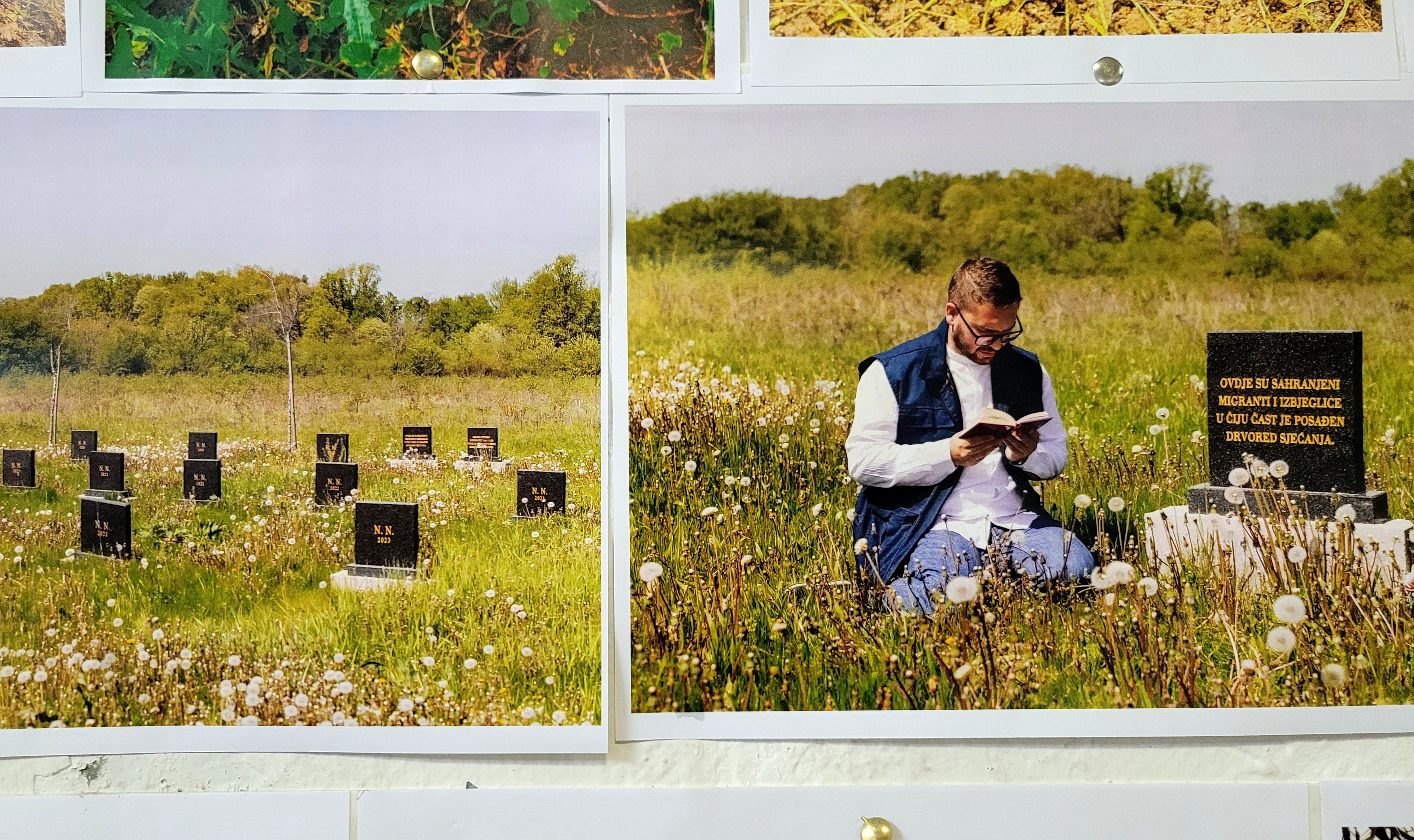
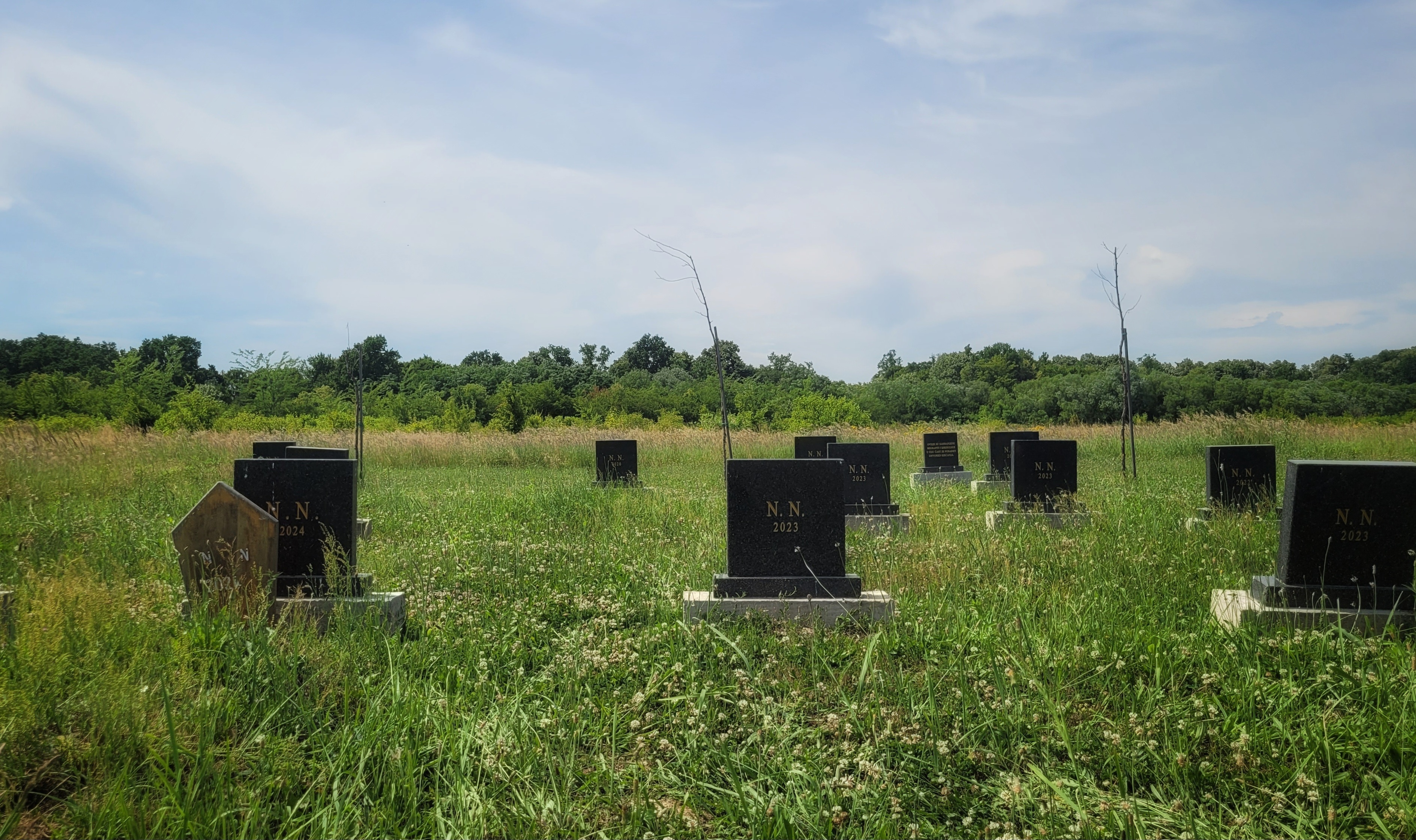
"MIGRANTS AND REFUGEES ARE BURIED HERE." Bijeljina Cemetery (Bosnia and Herzegovina), June 2026.
Share the post
L'Autore
Giuliana Băruș
Studi in Giurisprudenza e Diritto Internazionale a Trieste.
Oltre che di Diritto (e di diritti), appassionata di geopolitica, giornalismo – quello lento, narrativo, che racconta storie ed esplora mondi – fotoreportage, musica underground e cinema indipendente.
Da sempre “permanently dislocated – un voyageur sur la terre” – abita i confini, fisici e metaforici, quelle patrie elettive di chi si sente a casa solo nell'intersezionalità di sovrapposizioni identitarie: la realtà in divenire si vede meglio agli estremi che dal centro. Viaggiare per scrivere – soprattutto di migrazioni, conflitti e diritti – e scrivere per viaggiare, alla ricerca di geografie interiori per esplorarne l’ambiguità e i punti d’ombra creati dalla luce.
Nel 2023, ha viaggiato e vissuto in quattro paesi diversi: Romania, sua terra d'origine, Albania, Georgia e Turchia.
Affascinata, quindi, dallo spazio post-sovietico dell'Europa centro-orientale; dalla cultura millenaria del Mediterraneo; e dalle sfaccettate complessità del Medio Oriente.
In Mondo Internazionale Post è autrice per la sezione “Organizzazioni Internazionali”.
Categories
Tag
Migrazioni rotte migratorie rotta balcanica Bosnia Herzegovina Serbia croazia balcani UE respingimenti Patto immigrazione e asilo