
by Kaitlyn Rabe - Vice President and General Manager, Mondo Internazionale APS
Executive Summary
The Makkah Defence Pact, signed by Pakistan, Saudi Arabia, and Türkiye on August 7, 2026, offers what is widely regarded as a new comprehensive security architecture for the post-Pax Americana Middle East. Most attention to the agreement has focused on its implications for the Gulf region in the context of the USA-Israeli war on Iran; amid escalating tensions between Pakistan and Afghanistan, however, it is worth evaluating the Pact’s potential application to collective defense along the Durand Line.
Although the Pact presents a potentially viable framework for deterring and responding to cross-border terrorism between Afghanistan and Pakistan—particularly given its initial willingness to respond to non-state actors—political, strategic, and institutional constraints among the Pact’s members significantly limit the likelihood of its activation along the Durand Line.
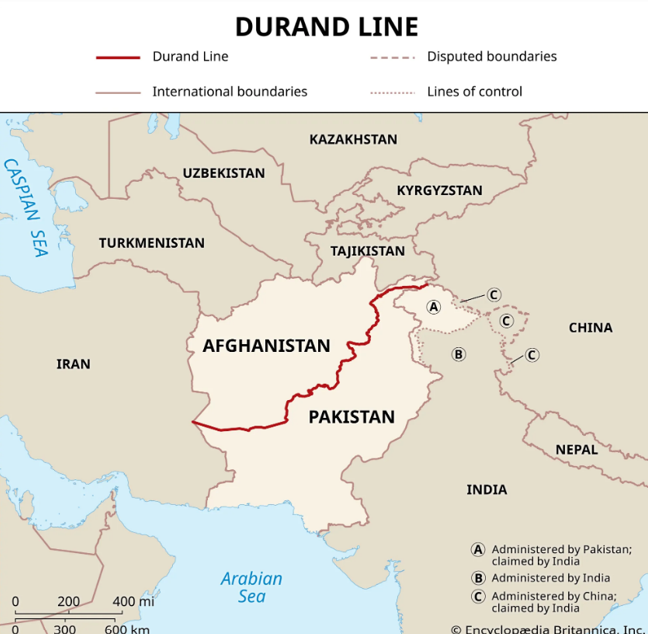
Figure 1: Durand Line. (Encyclopædia Britannica, n.d.)
1. Timeline
Although not the first time Pakistan conducted airstrikes since the Taliban’s return to power in August 2021, Pakistani Defence Minister Khawaja Muhammad Asif formally declared “open war” on Afghanistan on February 27, 2026 (Khalil 2026). The statement followed several months of reportedly intensifying terrorist attacks conducted throughout Balochistan and Khyber Pakhtunkhwa, which Pakistan claimed were conducted by terrorist groups given safe harbor by the Afghan Taliban (Basit 2025).
Between approximately February and June 2026, the de facto authorities in Kabul and Pakistan exchanged fire across the border, each claiming to be targeting legitimate military targets. Since then, Pakistan has also suffered multiple terrorist attacks by multiple groups such as the Tehrik-i-Taliban Pakistan (TTP), Ittehad-ul-Mujahideen Pakistan (IMP), Al Qaeda in the Indian Subcontinent (AQIS), and the Balochistan Liberation Army (BLA) (Jadoon and Tahir 2026). While Pakistan accuses the Afghan Taliban of offering safe harbor to militants in these groups, the Taliban denies this charge. The Afghan Taliban, meanwhile, has accused Pakistan of injuring or killing civilians throughout the military campaign in Afghan territory (Davies 2026).
After an interlude of relative calm between the two governments which began in June 2026, Pakistan rebegan strikes on Afghanistan on September 21, following an attack on Kohat, claimed by the IMP (Shah 2026).
Meanwhile, Pakistan, Türkiye, and Saudi Arabia were finalizing a collective defense agreement, The Makkah Defence Pact, which was announced in a joint statement on August 7, 2026 and represented an expansion upon an earlier Strategic Mutual Defence Agreement between Pakistan and Saudi Arabia (IISS 2026). Although the member States have not yet released the full text, the three main pillars of this agreement are [1] “collective deterrence against any act of aggression”, [2] “any armed attack against any one of the three States shall be regarded as an attack against them all”, and [3] “the enhancement of all aspects of defence cooperation among the three States” (Ministry of Foreign Affairs, Government of Pakistan 2026). Since finalizing the agreement, the three member States have taken steps toward actualizing the agreement in light of Houthi attacks on Saudi Arabia (Calabrese 2026), which has taken most of the media attention due to its placement within the broader context of the US-Israeli war on Iran. Nevertheless, given the increasing number of terrorist attacks within Pakistan, which took first place in the 2026 Global Terrorism Index (“Pakistan - Country Most Impacted by Terrorism in 2026” 2026; Global Terrorism Index Briefing 2026 2026), it is necessary to evaluate the potential application of the Makkah Defence Pact not only to the Gulf region, but to the Durand Line as well.
2. Opportunities
Although newborn, the Makkah Defence Pact arises with several strengths and advantages in the current global order. The Defence Pact offers second-order consequences, such as Pakistan bringing nuclear deterrence and Türkiye’s membership in NATO ensuring intervention by NATO states in the case of an attack on Turkish territory.
a. Regional Legitimacy
Furthermore, some have labeled the pact a “Sunni NATO”. This moniker is misleading (and often intended to be alarmist). Although the three States are, in fact, majority Sunni Muslim, the strategic motivations driving the pact are more interest-based and transactional than ideological or religious; nevertheless, the fact that the member States are three Muslim-majority nations offers—to a certain extent—some amount of cultural legitimacy in a region previously administered by the United States, whose population and politicians have, since September 11, shown increasing levels of Islamophobia, creating an uncomfortable dichotomy between its security relationships abroad and the domestic atmosphere (Benjamin and Simon 2026).
b. Possible Juridical Legitimacy under Article 51 and Security Council Resolutions
The fact that, less than two months after the governments announced the pact, they have already taken concrete steps to demonstrate their commitment to collective defense in Saudi Arabia is also reassuring to the agreement’s practicability. The fact that such steps are in response to attacks by Houthis—a non-state, proxy actor—shows potential transferability to the attacks conducted by various terrorist groups throughout Pakistan. Although the Afghan Taliban denies harboring the TTP, BLA, IMP, AQIS, and other related groups who have claimed responsibility for terrorist attacks throughout Pakistan, a report directed toward the UN Security Council confirms that the Afghan Taliban “support” the TTP (Letter Dated 6 August 2026 from the President of the Security Council Acting in the Absence of a Chair of the Security Council Committee Pursuant to Resolutions 1267 (1999), 1989 (2011) and 2253 (2015) Concerning Islamic State in Iraq and the Levant (Da’esh), Al-Qaida and Associated Individuals, Groups, Undertakings and Entities Addressed to the President of the Security Council 2026). The same report states that the BLA reportedly trained alongside the TTP throughout facilities in Afghanistan. Such statements seemingly align with Pakistan’s claims that the acting rulers of Afghanistan are not only harboring, but actively maintaining (though the report does not specify by which means) terrorist networks operating across the Pakistan-Afghan border, reducing any plausible deniability that the Afghan Taliban might have possessed, and creating a context in which intervention, invoked by Pakistan, would be legitimized by Security Council Resolutions 1368 and 1373 under Article 51, which reaffirms the right of self-defense against terrorist attacks and requires states to deny safe haven to terrorists (United Nations Security Council 2001).
c. Fracturing of Relationships Between Militant Groups
Furthermore, the fracturing between IMP, the Afghan Taliban, TTP, and AQIS since the IMP attacked Muslims and a mosque in the September 18 attack on Kohat serves as affirmation that the relations between these entities—as all relations between top-down, ideology-driven organizations—remain brittle. This fracturing, along with the inherent competition for recruits, influence, and resources among the various extremist factions, may create an opportunity for intervening forces to capitalize on disorganization and disagreement to tamp down the extremist threat (The Kabul Tribune 2026; Jadoon and Tahir 2026).
3. Challenges
a. Wavering Relationships between Member States
Nevertheless, beyond the Pact’s nascency, there are several other hurdles to overcome to activate its mechanisms for intervention along the Pakistan-Afghan border. Generally speaking, the fact that the pact was established among the three States on the basis of limited, collective defense interests is an asset, as it helps prevent mission creep. It also, however, is a result of the fluctuating political, diplomatic, and economic relations between the States. Saudi-Pakistan relations declined after the September 11 attacks and reached a low point when Saudi Arabia signed an agreement to establish the India-Middle East-Europe Economic Corridor in September 2023. Saudi-Turkish relationships, likewise, suffered due to differences between the two countries’ official positions on the Arab Spring (“The Makkah Defence Pact: A New Security Architecture for the Middle East” 2026). While the Defence Pact—being a strictly security and defense-related framework in a context where the member States face existential threats—is unlikely to collapse in the short term due to security necessities, fluctuating political relations and lack of a deeper values-based continuity pose a potential threat to its long-term viability.
b. Proliferating Threats
Although multiple specific groups operating between the Afghanistan-Pakistan borders experience volatile relations and, in a de facto sense, compete with one another, the TTP has absorbed more than 100 groups since 2020, underscoring its growing influence among radicalized individuals and groups (Basit 2025). Furthermore, although Al Qaeda is largely considered to have failed in its global mission, it has capitalized upon the safe haven under the Taliban to proliferate within Afghanistan (Knipp 2026; Desk 2026); Pakistan—due to geographic reasons—is likely to bear the main brunt of this proliferation. Meanwhile, the Balochistan Liberation Army has reportedly begun obtaining NATO materiel in Afghanistan (Khan 2026).
c. Domestic Weaknesses
Domestically, Al Qaeda-funded, Taliban-run madrassas throughout Afghanistan reportedly receive funding from sources originating in Saudi Arabia. Although there is nothing to suggest that such funding originates from the Saudi government, it shows a weak link within the Pact’s three member States in enforcing measures against financial flows directed towards threats against other member States. There is also the uncomfortable fact that the Pakistani military hosts elements throughout its ranks which are, reticently, sympathetic to militant Islamist causes (Anonymous, “Interview with a Former Intelligence Officer with the Islamic Republic of Afghanistan,” September 9, 2026). Meanwhile, Türkiye’s Parliament has yet to ratify the pact, while military deployments abroad must be authorized by Parliament (Türkiye Today 2026).
d. The Geopolitical Context
If Türkiye were to be attacked in a conflict with Afghanistan, NATO would theoretically be involved; nevertheless, NATO would most likely be hesitant to intervene in any form of hybrid conflict. This has become evident even as it manages the most immediate threat to its borders, with Russia throughout the Ukraine War testing the Alliance’s political will and endurance through multiple forms of hybrid warfare (“The Everywhere War – Sub-Threshold Warfare Tracker” 2026). This is also particularly pertinent given the Alliance’s recent history in Afghanistan, and probable lack of will to reenter into a conflict with the Taliban.
The India question, which comprises the fulcrum of Pakistan’s foreign policy, also remains relevant to the matter. Although India remains within the UAE-Israel axis and, for the time being, maintains strategic relations with the United States, rapprochement between India and the Taliban squeezes Pakistan between two enemy states (“India Is Seeking to Reset Relations with the Taliban. But Can This Rapprochement Last?” 2026). Intervention in a Pakistani conflict with Afghanistan, which may receive support from India, also complicates matters for Saudi Arabia, which, along with the UAE, Israel, the European Union (23 of whose member States are also NATO members) and three EU member States, is part of the previously mentioned India-Middle East-Europe Economic Corridor (About – India-Middle East-Europe Economic Corridor (IMEC), n.d.).
e. Legal and Customary Challenges
Finally, although monitoring reports by the UN Security Council seem to corroborate the Afghan Taliban’s role in supporting extremist groups working against the Pakistani government, the UN Security Council also harbors the only State in the world, Russia, to have formally recognized the Taliban as Afghanistan’s de jure government. A Russian veto would not by itself bar Pact action, since a claim of collective self-defense under Article 51 of the UN Charter does not require Security Council authorization. It would, however, make Council-authorized action against Afghanistan unlikely and could weaken the international legitimacy of any Pact operation.
Moreover, from a legal perspective, the ICJ has ruled that “the Court is unable to consider that, in customary international law, the provision of arms to the opposition in another State constitutes an armed attack on that State” (Case Concerning Military and Paramilitary Activities in and Against Nicaragua 1986), potentially rendering international intervention in or against Afghanistan difficult to defend juridically.
4. Conclusions
The Makkah Defence Pact offers a range of both immediate and second-order deterrence implications for its member States. The activation of the Defence Pact in response to Houthi attacks on Saudi Arabia only weeks after the deal was finalized shows the political will necessary to effectively activate the defense agreement in reaction to non-state proxy armed groups.
Nevertheless, the Pact, when applied to the issue of cross-border terrorism between Pakistan and Afghanistan, faces several potential challenges, including a potential lack of political will, the complexities of NATO involvement, competing strategic interests among the member States, and the broader geopolitical dynamics surrounding Afghanistan, as well as legal constraints, namely the high attribution threshold for using force against a state and the likelihood that Russia would veto any Security Council authorization of force. While these challenges do not necessarily preclude the Pact from being applied to the Durand Line, they suggest that its most realistic role may be as a mechanism for deterrence, intelligence-sharing, and coordinated counterterrorism support rather than direct military intervention in Afghanistan.
References
About – India-Middle East-Europe Economic Corridor (IMEC). n.d. Accessed October 9, 2026. https://www.imec.international/about/.
Basit, Abdul. 2025. “Pakistan’s Worsening Threat Landscape in 2025.” The Diplomat, December 31. https://thediplomat.com/2025/12/pakistans-worsening-threat-landscape-in-2025/.
Benjamin, Daniel, and Steven N. Simon. 2026. “The Other War on Terror: 9/11 and the Unraveling of American Democracy.” Foreign Affairs, September 11. https://www.foreignaffairs.com/united-states/other-war-terror.
Calabrese, John. 2026. “The Mecca Alliance Meets the Red Sea – Saudi Arabia’s New Defense Pact Faces Its First Major Test.” The Conversation, September 29. https://doi.org/10.64628/AAI.7hk6qww7x.
Davies, Caroline. 2026. “Pakistan Launches Deadly Air Strikes on Afghanistan.” BBC News, October 1. https://www.bbc.com/news/articles/cw4grg92lmr5o.
Desk, The National News. 2026. “Former CIA Officer Warns US Shift Leaves Gaps as Al-Qaida Regroups in Afghanistan.” The National Desk, September 11. https://thenationaldesk.com/news/americas-news-now/former-cia-officer-warns-us-shift-leaves-gaps-as-al-qaida-regroups-in-afghanistan-911-25-years-saudi-arabia.
Encyclopædia Britannica. n.d. “Durand Line.” Encyclopædia Britannica. Accessed October 10, 2026. https://www.britannica.com/event/Durand-Line.
Global Terrorism Index Briefing 2026. 2026. Institute for Economics and Peace.
IISS. 2026. “The Pakistan–Saudi Arabia Defence Relationship.” February. https://www.iiss.org/publications/strategic-comments/2026/the-pakistansaudi-arabia-defence-relationship/.
“India Is Seeking to Reset Relations with the Taliban. But Can This Rapprochement Last? | Chatham House – International Affairs Think Tank.” 2026. June 11. https://www.chathamhouse.org/2025/10/india-seeking-reset-relations-taliban-can-rapprochement-last.
Jadoon, Amira, and Saif Tahir. 2026. “Mosque Attack Highlights Evolving Extremism Landscape That Has Brought Pakistan-Afghanistan Ties to Crisis Point.” The Conversation, September 23. https://doi.org/10.64628/AAI.7sjxp43gp.
Khalil, Hafsa. 2026. “Pakistan Defence Minister Says Country in ‘open War’ with Afghanistan after Strikes.” BBC News, February 27. https://www.bbc.com/news/articles/cvgjd7pv4y4o.
Khan, Yummna Hina. 2026. “Afghanistan and the BLA’s Evolving Capabilities.” The Diplomat, October 8. https://thediplomat.com/2026/10/afghanistan-and-the-blas-evolving-capabilities/.
Knipp, Kersten. 2026. “25 Years after 9/11: Al-Qaeda Weakened but Not Gone.” DW, September 10. https://www.dw.com/en/25-years-after-9-11-al-qaeda-weakened-but-not-gone/a-79202457.
Letter Dated 6 August 2026 from the President of the Security Council Acting in the Absence of a Chair of the Security Council Committee Pursuant to Resolutions 1267 (1999), 1989 (2011) and 2253 (2015) Concerning Islamic State in Iraq and the Levant (Da’esh), Al-Qaida and Associated Individuals, Groups, Undertakings and Entities Addressed to the President of the Security Council. 2026. No. 38. United Nations Security Council.
Militarv and Puramilitary Activities in Und Aguinst Nicaragua (Nicaragua v. United States of America) (The International Court of Justice June 27, 1986). https://doi.org/10.1163/9789004481237_119.
Ministry of Foreign Affairs, Government of Pakistan. 2026. “Makkah Al-Mukarramah Summit for Joint Defence.” Makkah, August 7. https://mofa.gov.pk/press-releases/makkah-al-mukarramah-summit-for-joint-defence.
“Pakistan - Country Most Impacted by Terrorism in 2026.” 2026. Vision of Humanity, March 18. https://www.visionofhumanity.org/countries-most-impacted-by-terrorism-in-2026/.
Shah, Zain. 2026. “Why Did Pakistan Strike inside Afghanistan after Months of Calm?” ACLED, September 23. https://acleddata.com/expert-comment/why-did-pakistan-strike-inside-afghanistan-after-months-calm.
“The Everywhere War – Sub-Threshold Warfare Tracker.” 2026. Sahaidachnyi Security Cent4r. https://sahasec.org/tracker/.
The Kabul Tribune. 2026. “Taliban Condemn Deadly Mosque Blast in Pakistan’s Kohat.” September 19. https://thekabultribune.com/en/0011238.
“The Mecca Defence Pact: A New Security Architecture for the Middle East.” 2026. Arab Center for Research & Policy Studies, August 18. https://www.dohainstitute.org/en/Lists/ACRPS-PDFDocumentLibrary/mecca-joint-defence-agreement.pdf.
Türkiye Today. 2026. “Mecca Alliance Pact Headed to Parliament within Days, Ruling AK Party Says.” October 7. https://www.turkiyetoday.com/region/mecca-alliance-pact-headed-to-parliament-within-days-ruling-ak-party-says-3229853.
United Nations Security Council. 2001. “S/RES/1373(2001).” September 28. https://docs.un.org/en/S/RES/1373(2001).