
Translated by Federica Conti
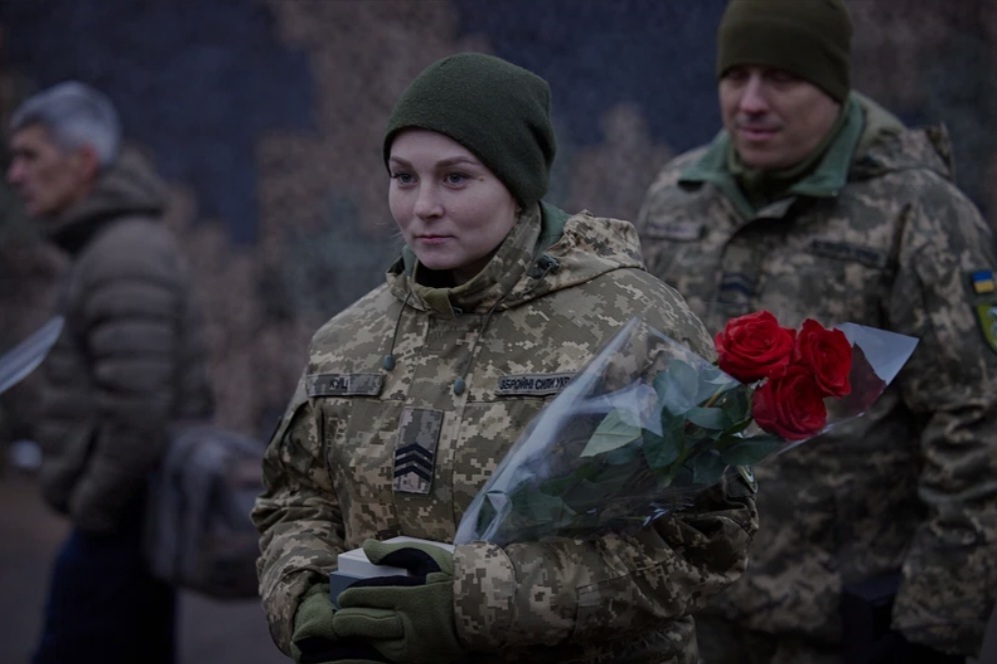
A growing number of Ukrainian women are joining the army, after the fourth anniversary of the war led by Moscow against Kyiv. This is happening while the war is still not close to an end, as it was not in January 2025, when President Trump came back to the White House promising to mediate to obtain peace rapidly. This is also happening when there are fewer men available to go to the front. We can state, then, that it is not the war but resistance to war that is woman.
A second opportunity: from prison to the front
“For me, the mobilization of sentenced women is a step to a new life. I am ready to dedicate myself fully to this cause”, said a Ukrainian ex-convict recruited to fight in the oblast of Zaporizhzhia. She believes that prison was just a phase of her life, not something that defines her whole life. Now she can build a different future. “For my children, I will not be anymore just a convicted mother, but a soldier mother”.
The requirements for commutation of a prison sentence in enlistment are strict. The 1st Assault Regiment is seeking volunteers without drug or alcohol addictions: captains believe that these problems “decimate” the army more rapidly than enemy attacks. Other requirements include the absence of severe infectious diseases, such as tuberculosis and HIV, as well as emotional stability in order to bear the tension of life on the front line. After the recruitment and signing a contract with the armed forces of Ukraine, the process begins with a short period of training in the field. And, after that, the front, where survival depends on ability, force, and luck.
In the region of Zaporizhzhia, the reality of war takes shape. Even though the conditions were strictly severe and nothing could really prepare someone to face the front until they experienced it, the time spent in reclusion rendered these women more resilient. For these women, there is no possibility of return, though. If they fail, they will pay the consequences and will return to prison.
In the front line
The army of Kyiv became more receptive towards women than they were at the beginning of the invasion, when Ukrainian men stood in line in the recruitment centres to become soldiers.
Before the approval of the law of 2018 by the Verkhovna Rada, the Ukrainian unicameral parliament, the army was a patriarchal institution: women were not legally allowed to serve as soldiers or study in the military universities.
Women who joined the army when Russia invaded parts of eastern and southern Ukraine in 2014 fought on the front line, but they were classified as non-fighters. Members of the army, for instance, were Ukrainian biathletes, who, obviously, were good snipers, but in the documents, they were registered as chefs.
For State members of NATO, from the mid 70s, women had the opportunity to obtain a military rank in countries such as Denmark, France, Belgium, Canada, Germany, the United Kingdom, the United States of America, Greece, the Netherlands, Norway, Portugal, and Turkey. Many of them in that period not only were involved in the medical and food assistance, but also, as it happens today, in the ground troops and border guards, in the artillery, in the navy, and in the air force. The first time women participation to military campaigns was mentioned at the beginning of the 20th century, namely during the First World War. And the number of Ukrainian women in the list was large.
Today, they represent about 20% of military cadets of Kyiv: of the more than 400,000 soldiers currently serving in the Armed Forces of Ukraine, about one-fifth are women, and thousands of them officially serve in combat positions. Among these are fighter pilots, artillery captains, drone pilots, and engineers in service in different military units.
Mondo Internazionale APS - Riproduzione Riservata ® 2026
Share the post
L'Autore
Giuliana Băruș
Studi in Giurisprudenza e Diritto Internazionale a Trieste.
Oltre che di Diritto (e di diritti), appassionata di geopolitica, giornalismo – quello lento, narrativo, che racconta storie ed esplora mondi – fotoreportage, musica underground e cinema indipendente.
Da sempre “permanently dislocated – un voyageur sur la terre” – abita i confini, fisici e metaforici, quelle patrie elettive di chi si sente a casa solo nell'intersezionalità di sovrapposizioni identitarie: la realtà in divenire si vede meglio agli estremi che dal centro. Viaggiare per scrivere – soprattutto di migrazioni, conflitti e diritti – e scrivere per viaggiare, alla ricerca di geografie interiori per esplorarne l’ambiguità e i punti d’ombra creati dalla luce.
Nel 2023, ha viaggiato e vissuto in quattro paesi diversi: Romania, sua terra d'origine, Albania, Georgia e Turchia.
Affascinata, quindi, dallo spazio post-sovietico dell'Europa centro-orientale; dalla cultura millenaria del Mediterraneo; e dalle sfaccettate complessità del Medio Oriente.
In Mondo Internazionale Post è autrice per la sezione “Organizzazioni Internazionali”.
Categories
Tag
Russia guerra russia-ucraina Donne al fronte NATO Arruolamento mobilitazione