
Translated by Stefania Madera
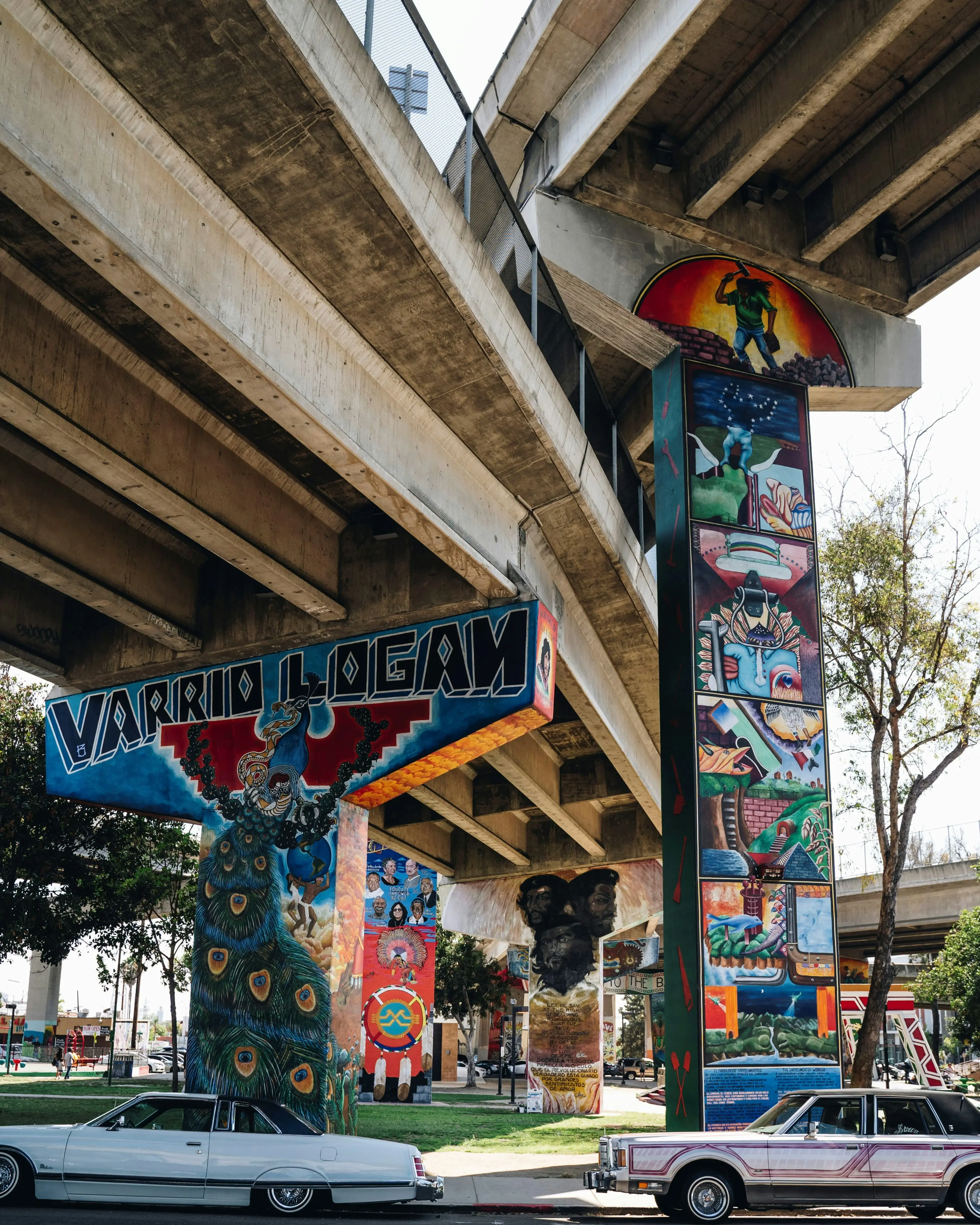
Painting and politics: two concepts that represent seemingly distant ways of looking at the world around us, but that can be perfectly compatible in certain contexts. The aesthetic magic a brush brings to life as it moves across the canvas can communicate messages so profound that they spark major artistic innovation. This artistic revival began in Mexico in 1921, and has commonly been referred to as “Mexican Renaissance”. A Country torn apart by a revolutionary uprising driven by a desire of retribution, which began in 1910 and was led by Emiliano Zapata and Pancho Villa, was by then inhabited by a large community of workers and peasants. During the Porfirian dictatorship, they had been deprived of all civil and social rights they believed they were rightfully entitled to. From the ashes of the past, Álvaro Obregón, President of Mexico, from 1920 to 1924, understood that, for a civilization victim to misery and hostility to flourish again, it would have been necessary to restore a national identity to society and introduce them to a history that seemed to belong to the past, but that should, instead, make them proud of the present. This project could only be achieved in one way: through education. José Vasconcelos, Minister of Education, had to find a way to convey these concepts of freedom and protection of social rights to a population in which 80% of them were unable to read. The leading figures of this post revolutionary era artistic movement were Diego María Rivera, José Clemente Orozco and David Alfaro Siqueiros, known collectively as “Los Tres Grandes” (The Big Three) for their unexpected ability of transform a political ideology in monumental artistic expression. In the Manifesto to the Artists of America, drafted by Siqueiros in 1921 and considered one of the founding documents of what would become known as Mexican Muralism, the need was proclaimed to « create a monumental and heroic art, human and public, drawing on the direct and living example of their great masters and the extraordinary heritage of pre-Hispanic America». To convey this sense of inclusion towards a society that had by then lost faith, it was no longer enough to express oneself on simple canvases. In particular, before embarking on this new social mission, Diego Rivera had made numerous trips to Europe, which had allowed him to become familiar with the main artistic avant-gardes of the period. In Paris, he had not only observed Pablo Picasso’s cubism up close, but had also met Amedeo Modigliani in person, who dedicated him a famous Ritratto (“Portrait”) in 1914. Through this in-depth study of European models, Rivera had understood that this could not be the proposal that artists put forward to the Mexican people. The archetype that is first conceived and only later put into practice is that of this technique at the service of Monumentalism. The vertical thrust created by “Los Tres Grandes” does not merely depict an innovation in identity for a Country that had seen its own identity stifled, but also conceals a deeper meaning. Mexican Muralism seeks to offer a powerful lesson in the democratic accessibility of art: these walls, reaching up to twenty meters in heigh, manage to enclose the viewer within a temporal dimension, in which the gaze must remain fixed on the representation for several minutes. The narrative unfolds towards the sky and,to reach the depths of thought, must be perceived, understood, absorbed. The muralists want the Aztec and Maya cosmovision to be fully assimilated by all the descendents of that community. In this worldview, verticality connects the three worlds: the underworld with its precolombian past, the revolutionary earthly world and the celestial world characterized by socialist utopia. In a Country deeply influenced by Catholicism, the walls resemble church naves, but the protagonists are different: the workers and the peasants who fight for their rights, are combined with the symbolism of height, thus representing the transition between servitude to liberation. “Los Tres Grandes” approach this reality through completely different methods and techniques. In Orozco’s work, at Hospicio Cabañas of Guadalajara, Monumentalism reaches its peak with the artist’s principal work: Man of Fire. Located in the Dome, at twenty three metres above the ground, it depicts a titanic figure that is meant to be remembered neither as a hero nor a victim. The very violence of revolution,war, dehumanization is embodied in a suffering and transfigured body which, at the same time, after enduring the pain of flames, is aware that it will soon be reborn. Siqueiros, the most radical of the three, introduces the concept of polygonal perspective, according to which these monumental murals must be designed as if they were on motion, allowing them to be seen and understood from different points of view. Moreover, he pioneers an innovation borrowed directly from the automotive industry: paintbrushes could no longer cover large surfaces quickly enough, whereas spray guns and synthetic resins could. Thanks to this innovation, Siqueiros’ mural at the Polyforum Cultural reaches a height of twelve storeys. Diego Rivera is entrusted with the creation of murals at Escuela Nacional Preparatoria, one of Mexico’s prestigious high schools. However, the artist found his greates success in the United States. The dialogue that developed between “Los Tres Grandes” and the United States, when they moved there in 1930s during the great depression, was instrumental. The expressive power of the three interpreters of Mexican struggle became a model for subsequent generations, inspiring the emergence of movements such as Chicano Art Movement and Abstract expressionism, and eventually modern Street art. Diego Rivera’s influence in the United States materialized in a series of monumental mural cycles that bought the Mexican movement’s social message into the industrial and financial heartlands of America. The beginning of this visual dialogue took place in California with Allegory of California (1931) at the San Francisco Stock Exchange, but his absolute masterpiece on the Us soil is represented by Detroit Industry Murals (1932-1933), created for Detroit Institute of Arts. In a vast cycle of twenty-seven panels, Rivera celebrated the workers’ labour and the complexity of Ford’s industrial machinery, transforming the assembly line into an imposing fresco on modernity and the social tensions of the time. The most famous episode, however, was undoubtedly ”Rockefeller case” of 1932. The oil magnate family had commissionated Rivera, together with Catalan muralist José María Sert and English artist Frank Brangwyn, to paint nine murals for the atrium of RCA Building in Rockefeller center in New York. This is how the Man at the Crossroads fresco came into being, featuring a depiction of Lenin as well, reflecting the artist’s close ties to Mexican Communist Party. Nelson Rockefeller informed Rivera that the «scenes of communist activities» might be considered offensives, but the response he received was «Rather than mutilate the conception, I should prefer the physical destruction of the conception in its entirety, but preserving, at least, its integrity». The painted wall was covered up and subsequently destroyed between 10 and 11 February 1934.
This very episode captures the fortitude and determination of these artists to express themselves: they wanted to give a voice and an identity to people who felt like “nobodies”, to a society at risk of losing its own history. It is no coincidence that Mexican Muralism has been described as «an art of struggle, instructive, for everyone». A message and legacy that contemporary society also deeply needs.
Mondo Internazionale APS - Riproduzione riservata ® 2026
Share the post
L'Autore
Vittoria Schina
Categories
Tag
mexico Muralism United States of America