
What does it mean, today, to defend human rights through culture, inquiry and cinema? This question is answered by the Human Rights Film Fest, the film and public debate festival organized by Ars Mundi – in which Mondo Internazionale also collaborated this year – and hosted, from September 9th to 13th, in the setting of the Torrione Prenestino Park in Rome.
A festival that was born, as Iuliia Vdovina, Project Manager of Ars Mundi APS, explains “from the need to create a space for dialogue and discussion about human rights in Rome, a place where we can discuss these issues through cinema, but also meet, listen to testimonies, and engage with people who directly experience certain realities”. For the organizers, Iuliia Vdovina and Anni Tso, human rights are not a topic that concerns “someone else”, but rather a collective issue: “We would like the Festival not to be just a film festival, but to become a space for education and awareness, also aimed at schools and public institutions, to stimulate critical thinking among the new generations.”
Through a five-evening programme dedicated to five of the major hotspots of our present – Palestine, Sudan, Afghanistan, Myanmar and the indigenous peoples of the Amazon – the festival offered the public a space for reflection and dialogue, challenging the stereotypical narratives and media silence imposed by mainstream media.
The choice of themes: turning the spotlight on forgotten crises
But how is this map of conflict geographies drawn? The selection of this year's five thematic evenings meets a criterion of ethical and political urgency. As Vdovina explains: “The choice arises first of all from the emergencies we see in the world. There are too many conflicts and too many crisis situations and we cannot address them all, but we felt the need to shine a spotlight on some realities that risk being forgotten”.
This is the case in places such as Sudan or Myanmar, which are often completely absent from public debate and the media. Hence the need for a format that combines visual language with direct comparison: “Cinema opens a door, but then we want there to be the possibility of meeting people, listening to them and asking questions. It is important for us not to simply tell the stories of these countries from the outside, but to support the voices of communities, giving them the opportunity to speak directly to the public”.
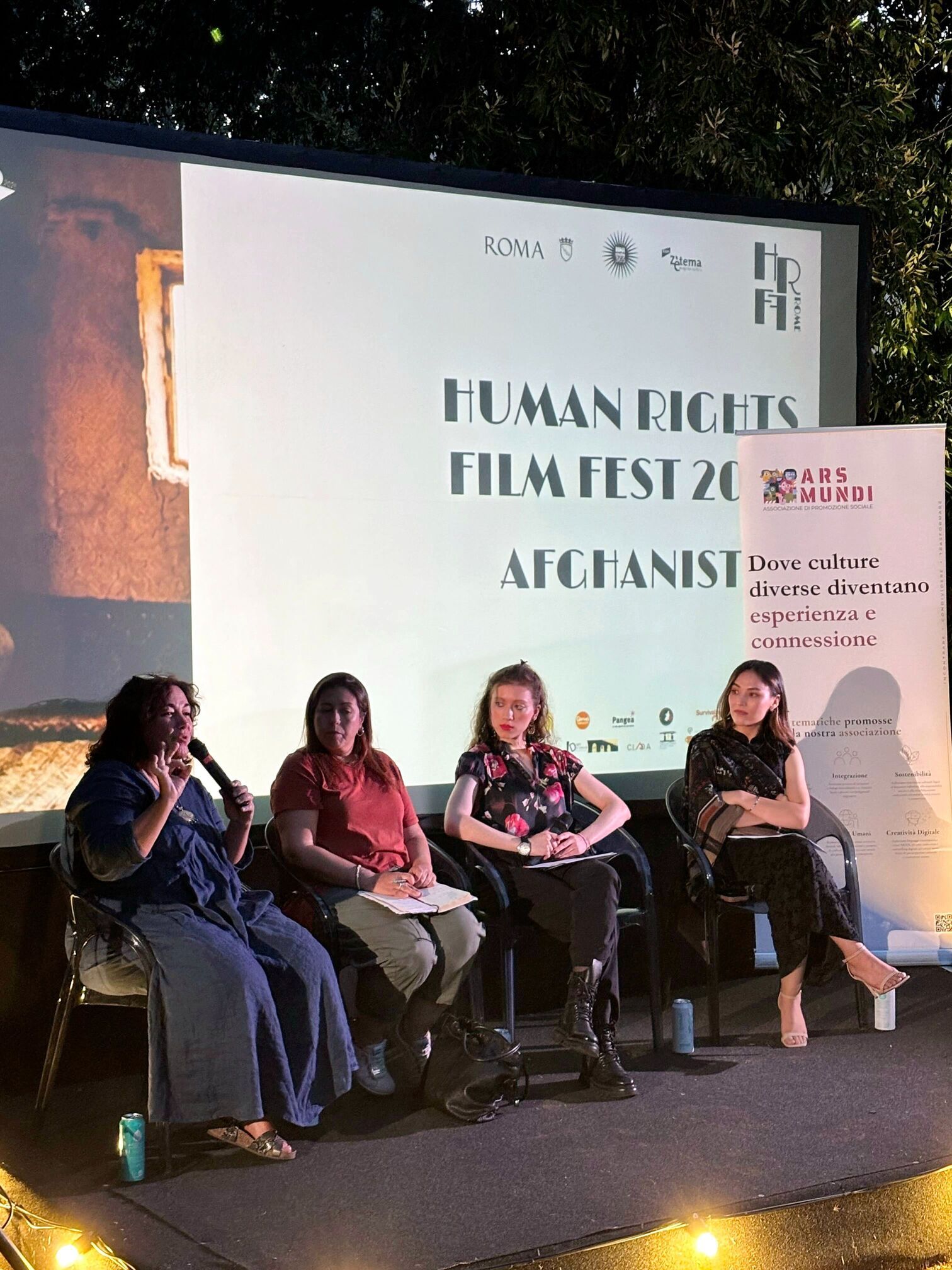
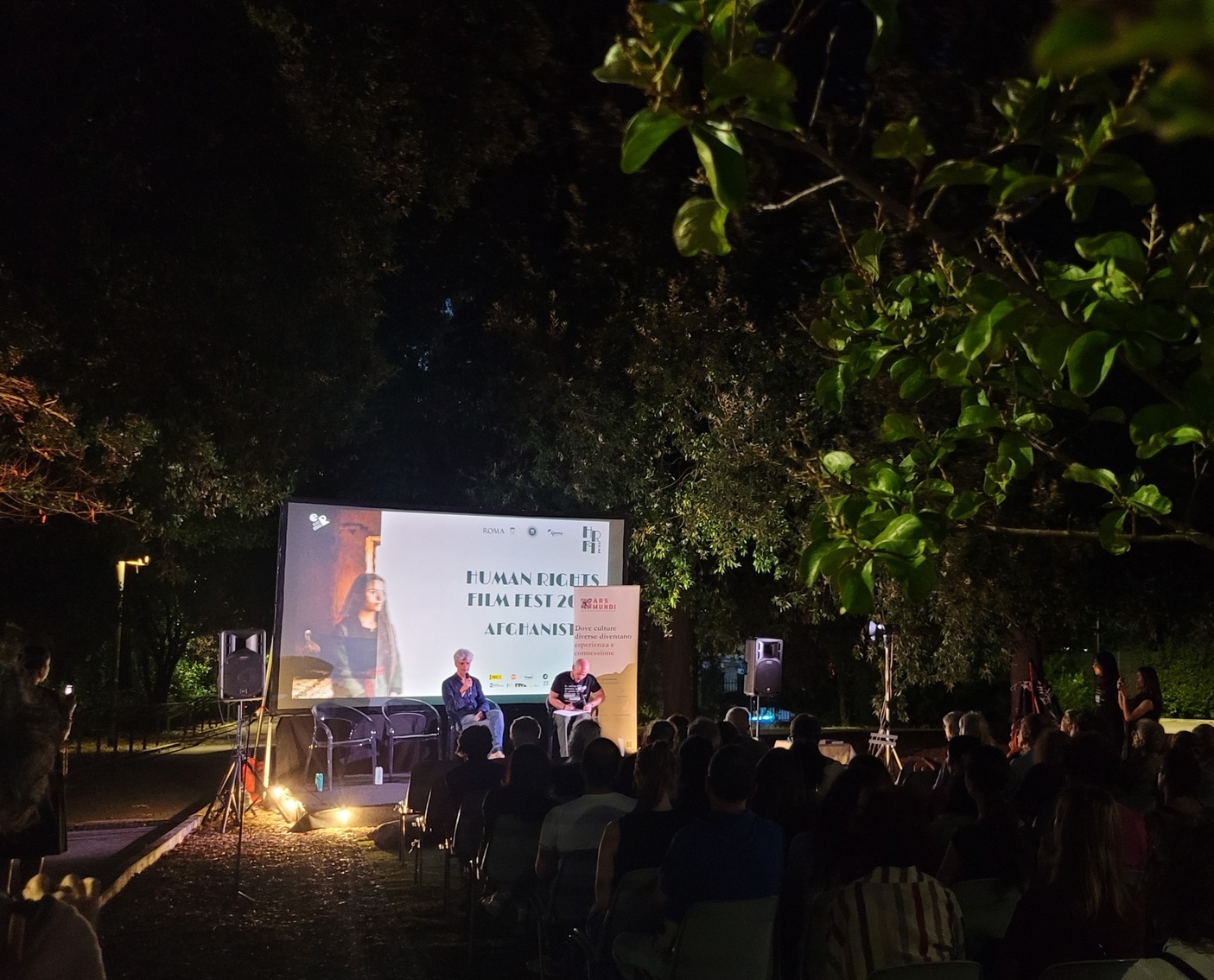
September 11, 2026, the talk “Beyond the War: The Afghanistan We Don’t See”
A Map of Global Struggles
Within this choral framework, each evening represented a part of a larger mosaic, revealing how local injustices are the product of interconnected global dynamics:
• Palestine Today and the Voice of Resistance: The festival has shone a spotlight on the historical and daily tragedy of the Palestinian people, bringing resistance to occupation and territorial fragmentation to the big screen and public debate.
• Sudan and forgotten crises: A necessary focus on the dynamics of a complex crisis, made up of violence and mass displacement, but also of the courageous mobilization of civil society for democratic transition.
• The Afghanistan we don't see, the one beyond the conflict, the scene of courageous clandestine resistance led by women. This complexity was brought to light by an exceptional panel of speakers: Simona Lanzoni (vice president of the Pangea Foundation), who spoke about the organization’s work on the ground to stand by Afghan women; Alka Sadat (Afghan director, producer, and cinematographer), a witness to the civil and cultural value of the image; and Francesca Patrizi (of CISDA), who emphasized the importance of supporting historical and secular movements like RAWA; and Rahel Saya (Afghan journalist and activist), whose testimony reiterated that the voice of Afghanistan cannot be silenced. The meeting was introduced and moderated by Giuliana Băruș on behalf of Mondo Internazionale APS.
• Myanmar and Democratic Resistance: Turning its attention to Southeast Asia, the Festival explored the struggle of Burmese people against the military junta, highlighting the crucial role of civil disobedience movements and ethnic minorities.
• The indigenous peoples of the Amazon and the defense of the land: A key focus on the plundering of natural resources, land grabbing and the struggle of indigenous peoples, guardians of biodiversity and ancestral knowledge put at risk by a predatory model of development.
Cinema as a Bastion for Freedom
At a time when borders are once again being erected — whether in the form of physical barriers along migration routes, invisible walls imposed by fundamentalism, or frontiers trampled by environmental exploitation — events such as the Human Rights Film Fest, organised by Ars Mundi in collaboration with Mondo Internazionale, serve as an essential bastion of freedom.
Among this year’s new initiatives was the first edition of Shorts for Rights, an international short film competition dedicated to stories centred on human rights, which presented three awards:
• Best Short Film: Feel It From My Words by John RG Lacey, New Zealand, 2025;
• Jury Prize: Between Sky and Sea by Ismail Abu Hatab, Palestine, 2025;
• Special Mention: Melatonin by Hannaneh Daliri, Iran, 2026.
As the very spirit of the Festival recalls, the ultimate goal is very simple and at the same time radical: to ensure that certain stories are not forgotten, by creating vibrant spaces where the community can listen, reflect, and take action. Because telling the stories of the struggles in Palestine, Sudan, Afghanistan, Myanmar, and the Amazon means, ultimately, reminding ourselves that defending dignity and freedom elsewhere also means defending our own humanity. Because “our life begins to end the day we remain silent about the things that matter”.
Mondo Internazionale APS - RiproduzioneRiservata ® 2026
Share the post
L'Autore
Giuliana Băruș
Studi in Giurisprudenza e Diritto Internazionale a Trieste.
Oltre che di Diritto (e di diritti), appassionata di geopolitica, giornalismo – quello lento, narrativo, che racconta storie ed esplora mondi – fotoreportage, musica underground e cinema indipendente.
Da sempre “permanently dislocated – un voyageur sur la terre” – abita i confini, fisici e metaforici, quelle patrie elettive di chi si sente a casa solo nell'intersezionalità di sovrapposizioni identitarie: la realtà in divenire si vede meglio agli estremi che dal centro. Viaggiare per scrivere – soprattutto di migrazioni, conflitti e diritti – e scrivere per viaggiare, alla ricerca di geografie interiori per esplorarne l’ambiguità e i punti d’ombra creati dalla luce.
Nel 2023, ha viaggiato e vissuto in quattro paesi diversi: Romania, sua terra d'origine, Albania, Georgia e Turchia.
Affascinata, quindi, dallo spazio post-sovietico dell'Europa centro-orientale; dalla cultura millenaria del Mediterraneo; e dalle sfaccettate complessità del Medio Oriente.
In Mondo Internazionale Post è autrice per la sezione “Organizzazioni Internazionali”.
Categories
Tag
Human rights film fest Ars Mundi MondoInternazionale Cinema e diritti umani Torrione Prenestino Pigneto Roma Capitale Shorts for Rights Palestine Sudan Afghanistan myanmar Amazzonia