
Historical prelude: a reopening fracture
Translated by Celeste Valentini
Since the birth of the Islamic Republic in 1979, Iran has experienced successive waves of protests. These are not isolated episodes, but rather the manifestation of a deep-seated friction between a segment of the society – mostly young people, women and urban classes – and a political system perceived as rigid and repressive. Over the years, while the immediate triggers have evolved, the core of the problem has remained the same: people demand freedom, dignity and better living conditions.
During the ‘90s, students took to the streets against censorship and repression. In 2009, millions of Iranians protested the results of the presidential elections, giving birth to the “Green Movement”. Between 2017 and 2019 protests broke out because of economic reasons: inflation, unemployment, rising prices. All of this helps us understand how current protests don’t spring from nowhere, they are only the latest chapter of a unhealed fracture between society and its leadership.
The evolution of protests: from the past to the present
In recent years, protests have evolved into a broad-based national uprising, as the Associated Press reports. It is no longer just political activists and students; the movement now involves workers, families, suburban youth, women, and ethnic minorities.
The turning point came in 2022, when Jina (Mahsa) Amini, who was arrested by the morality police, dies/while in custody of the morality police. The subsequent protests marked a profound change: with the slogan “Woman, Life, Freedom” people no longer called for a simple reform; but rather they challenged the system of control over private lives, bodies and individual choices. According to Amnesty International, the State’s response is extremely harsh: mass arrests, the use of weapons against protesters, summary convictions, systematic repression.
This wave of protests broke out between late 2025 and January 2026 and, as reported by ANSA and the Italian daily “Corriere della Sera”, spread to several cities where the economic situation was already difficult: high inflation, currency devaluation and difficulty in affording essential goods.
The Italian Institute for International Political Studies, in its analysis “Iran on the Brink”, underlines how the current crisis is both internal and external: internal, due to the increasing rift between citizens and leadership, and external, due to the geopolitical tensions that isolate the Country. This situation makes every protest more volatile and each State response harsher.
Repression and human rights: the most critical point
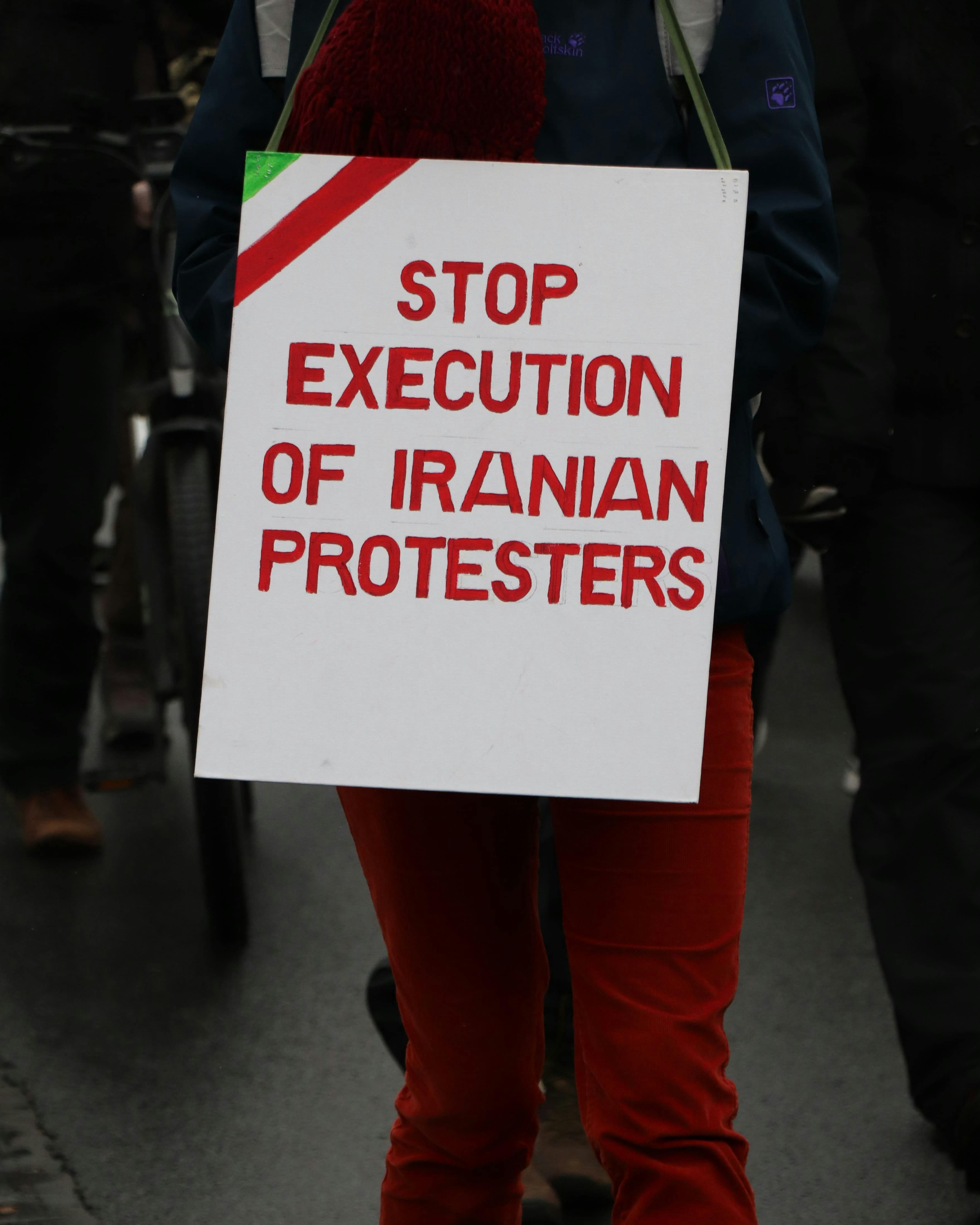
The most alarming data is the human cost. Amnesty International openly talks about “shedding of blood” and denounces the systematic use of violence against protesters. In a public statement, the United Nations confirmed a series of serious human rights violations: arbitrary arrests, restrictions on freedom of expression, internet shutdowns and the excessive use of force.
ANSA reports an estimated 12,000 deaths. Even the journalists highlight how difficult it is to verify the exact number of deaths in a context where access to information is strctly limited. It’s this lack of transparency that most concerns International Organizations: with internet shutdowns and the independent media being gagged, it becomes nearly impossible to reconstruct what is truly happening.
In the meantime, the Iranian crisis has entered the global debate. ANSA reports Donald Trump’s statements, in which he promises to provide aid to the Iranian people. These stances show that the protest it’s no longer just an internal matter, but a sensitive flashpoint in international balance.
Protests in Iran are not a temporary emergency, but the symptom of an enduring and deep fracture. Behind the slogans and the protests, there are stories of young people calling for freedom, families exhausted by the economic crisis and women claiming their right to choose their own path in life.
International sources clearly talk about repression and human rights violation.
A crucial question remains unanswered: how long can a society be governed solely through fear and control?
Today, the answer still seems to be suspended between the bravery of those who keep on taking to the streets and the rigidity of a system that shows no signs of opening.
Mondo Internazionale APS – All Rights Reserved ®2026
Share the post
L'Autore
Blerina Ymeri
Categories
Tag
Iran proteste pasdaran iranproteste