
Southern Syria Beyond the Civil War
In
the Western narrative of the war in Syria, the south of the country
occupies a marginal place. International attention continues to focus
on Gaza, southern Lebanon, or the Kurdish areas of northeastern
Syria, while the province of Suwayda
is undergoing a political transformation
destined to affect the balance of power throughout the Levant. In
this mountainous region, historically inhabited by the Druze, the
gradual withdrawal of the Syrian state has created a power vacuum
that local actors and regional powers are attempting to fill.
The
crisis is not merely about control of territory. Above all, it
concerns the redefinition
of sovereignty in the contemporary Middle East.
After more than a decade of civil war, Damascus formally retains
control over large portions of the country, but in many outlying
areas, state sovereignty now exists only on paper. Suwayda represents
one of the most striking examples of this fragmentation: A
province that is still nominally Syrian but increasingly autonomous
politically, militarily, and economically.
Survival as a Political Form
The
Druze are an ethno-religious
minority
that emerged in the 11th century from a branch of Ismaili Shi’a
Islam. A historically insular and highly hierarchical community, the
Druze are now spread across Syria, Lebanon, Israel, and Jordan. In
Syria, they account for about 3% of the population and are
concentrated primarily in the Jabal al-Druze region, in the Suwayda
Governorate.
Their political history is inextricably linked to
geography. In the Levant, the mountains have never been merely a
natural feature: they have served as a means of survival. Like the
Maronites in northern Lebanon or the Kurds in Anatolia and
Mesopotamia, the Druze have also built their political continuity by
leveraging their territorial isolation. Druze autonomy thus does not
stem from a modern state-building project, but from the ability to
transform geographical
marginality
into strategic protection.
For centuries, the Druze have avoided
direct confrontation with the major regional powers, preferring a
policy of adaptation and continuous negotiation. During the French
mandate in Syria, Paris used religious minorities to weaken Sunni
Arab nationalism; subsequently, first under Hafez al-Assad and then
under Bashar al-Assad, the Druze community maintained a pragmatic
relationship with Damascus, based on
limited local autonomy
in exchange for political loyalty.
Today, that compromise
appears increasingly fragile.
Suwayda and the Collapse of State Centralization
The Syrian civil war has gradually eroded the regime’s ability to control the country’s peripheries. Although Suwayda has remained relatively distant from the main front lines of the conflict, Syria’s economic deterioration has also deeply affected the Druze province. Runaway inflation, the collapse of the national currency, unemployment, and a lack of services have transformed social discontent into political protest.
Since 2023, Suwayda has become one of the main centers of protest against Bashar al-Assad. Unlike other areas of Syria, however, the demonstrations have not escalated into open war against Damascus. The Druze seem to have realized that the real goal is not to overthrow the regime, but to prevent the return of absolute central control. For this reason, in recent years, local militias have emerged, tasked with ensuring security and managing the territory in a largely autonomous manner.
Suwayda’s
geographical location makes this dynamic particularly delicate. The
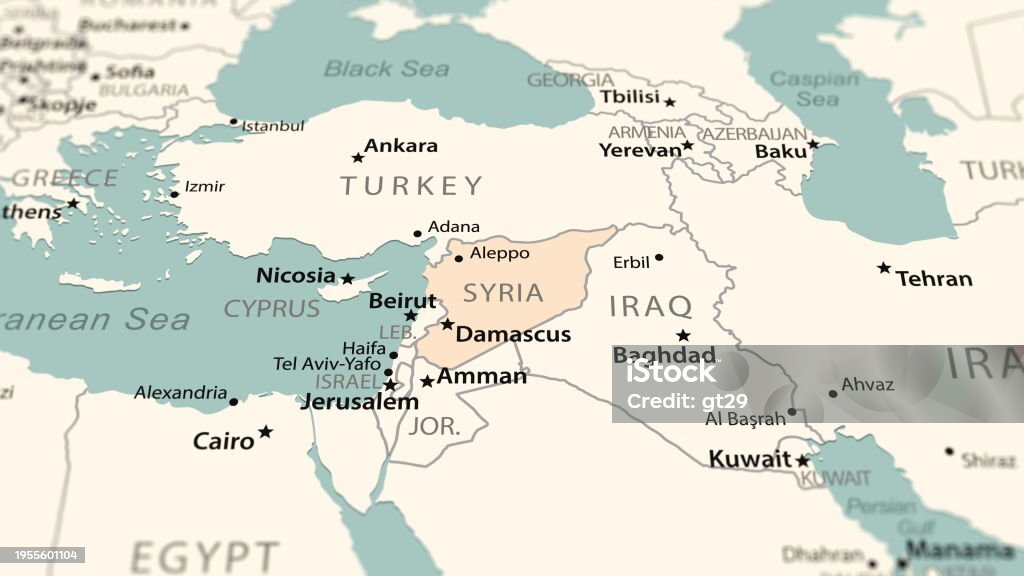
governorate borders Jordan, lies a short distance from the
Israeli-occupied Golan Heights, and is traversed by the main
trafficking routes for Captagon, the synthetic drug that
represents one of the most lucrative parallel economies of the Syrian
conflict. In the Middle East, geography continues to determine the
political value of territories more than ideologies do.
Israel and the Logic of Strategic Depth
For Israel, southern Syria is first and foremost a security issue. The presence of pro-Iranian militias near the Golan Heights represents one of Tel Aviv’s main strategic red lines. In recent years, the expansion of Iranian influence in Syria has prompted Israel to step up airstrikes against military infrastructure, logistics convoys, and figures linked to the Pasdaran or Hezbollah.
In this context, the Druze community is perceived as a relatively stable element in an increasingly volatile regional environment. Israel already maintains a special relationship with the Druze living within its borders: approximately 150,000 Israeli Druze citizens traditionally serve in the military and hold key positions within the state and security apparatus. In recent years, this relationship has facilitated the opening of informal channels with the Syrian Druze as well, particularly on humanitarian and religious grounds. However, Tel Aviv does not seem interested in creating an independent Druze entity in southern Syria. A Druze state would be militarily vulnerable and unable to survive without permanent external protection. Israel aims instead to consolidate a non-hostile territorial buffer zone along its northern border, preventing Iran from turning southern Syria into an operational platform against Israeli territory.
The
Druze thus become a functional component of Israel’s
defensive depth strategy:
not true allies, but actors useful for stabilizing the border.
The Return of Communities in a Fragmented Middle East
The case of the Druze reflects a broader transformation of the contemporary Middle East. The gradual weakening of the Arab states that emerged in the 20th Century is bringing religious, tribal, and ethnic communities—which once seemed subordinate to the national framework—back to the forefront. In Iraq, Syria, and Lebanon, state sovereignty appears to be increasingly supplanted by local networks of belonging, militias, and competing regional powers.
Levantine Christians have suffered a massive exodus; the Yazidis have been overwhelmed by the violence of the Islamic State; the Kurds continue to oscillate between aspirations for autonomy and internal fragmentation; and the Alawites are seeing the power structure built around the Assad family gradually eroded. In this scenario, the survival of minorities no longer depends on constitutions or international guarantees, but on their ability to make themselves strategically indispensable.
The
Druze of southern Syria seem to have understood this before others.
In the contemporary Levant, autonomy is not officially proclaimed:
it is built slowly, by exploiting the vacuum left by states and
negotiating daily with regional powers. The mountains of Jabal
al-Druze, once again, represent more than just a geographical refuge.
They represent a political form of survival.
Mondo
Internazionale APS - Riproduzione Riservata ® 2026
Share the post
L'Autore
Giorgia Cremona
Categories
Middle East & North Africa Diritti Umani Sicurezza Internazionale Società Peace, justice and strong institutions
Tag
Siria Drusi mediooriente Israele Geopolitica Iran minoranze