
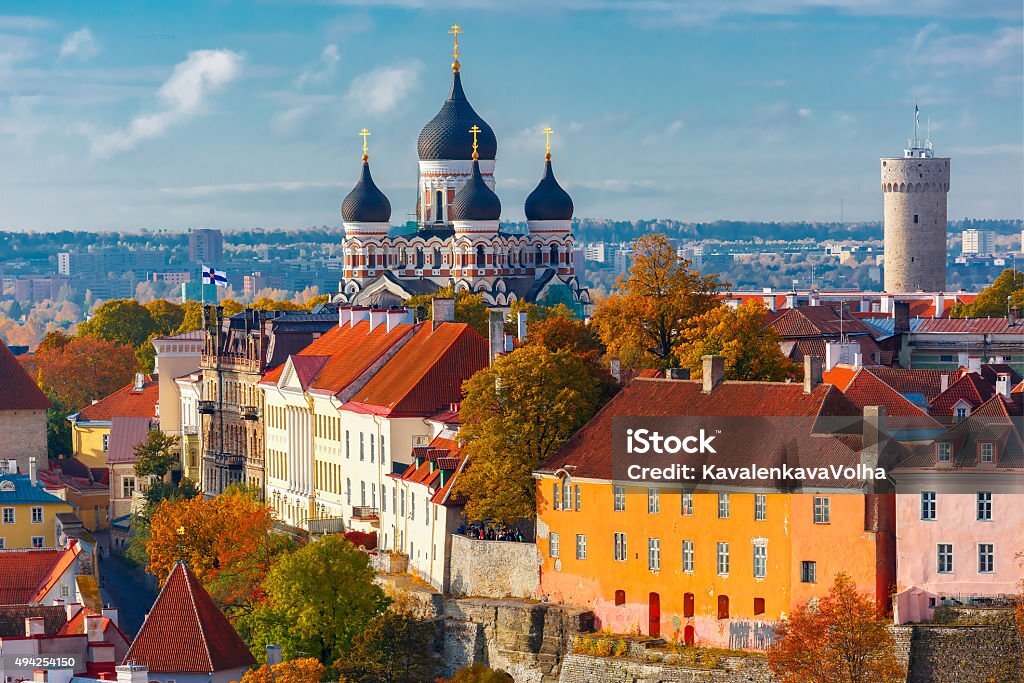
The fate of a nation is not determined with the servers in Silicon Valley, nor with the clauses of a cutting-edge constitution. For millennia, it has been decided along the fault lines of geography and in the demographic realities of the cradles of civilisation. Yet, in north-eastern Europe, there is a people who has attempted the boldest of contemporary geopolitical experiments: replacing physical space with cyberspace, erecting digital law as a protective shield against the inevitability of history. This is Estonia, a republic of just 1.3 million inhabitants, perched on a Baltic plain that for centuries has been a land of conquest and imperial trampling.
In Tallinn, the ruling class has developed a unique psychological mindset, born of the trauma of Soviet occupation: the conviction that the dematerialisation of the state is the only life insurance policy. If the state resides not in ministerial buildings but in a secure cloud, theoretically it cannot be invaded. But anthropological reality possesses a harshness that no binary code and no cutting-edge regulation can scratch. Behind the glittering façade of the world’s first ‘digital society’, the silent drama of a microscopically fragile nation is unfolding, ravaged by a falling birth rate and torn apart by an internal ethnic rift that has never healed.
Dematerialisation as a doctrine of survival
To understand the Estonian obsession with legislative and technological innovation, one must delve into the deep-seated psychology of a minority people. Estonians know they are very few in number. With a total population equivalent to that of a single neighbourhood in an Asian metropolis, the state suffers chronically from a lack of critical mass.
The response to this scarcity was the creation of e-Residency, a legal institution unique in the world, launched in 2014. Estonia allows anyone anywhere in the world to become a ‘digital resident’, setting up businesses and managing finances within the regulatory framework of the European Union without ever setting foot in Tallinn.
The figures bear witness to the success of this bureaucratic innovation:
• Over 110,000 registered e-residents worldwide.
• More than 28,000 digital companies founded by non-residents.
• Direct tax revenue for Tallinn amounting to over 250 million euros since the programme’s launch.
From the perspective of the philosophy of law, this is a revolution: citizenship detached from blood (ius sanguinis) and from the land (ius soli), transformed into a digital services contract. Yet this legal bloat conceals a basic strategic calculation. The more citizens and international companies are economically and legally tied to the Estonian system, the more the international community will be psychologically inclined to defend Tallinn in the event of an attack. Digital law, by design, becomes a military deterrent.
The human factor: empty cradles on the edge of history
However, servers do not take up arms and algorithms do not produce children. When one shifts one’s gaze from the digital society to the real world, Estonia reveals the same dramatic vulnerabilities as the rest of the Western continent, albeit exacerbated by its very small scale.
Estonia’s fertility rate currently stands at around 1.3 children per woman, a long way from the strategic replacement threshold of 2.1. In 2023 and 2024, the country recorded its lowest birth rates since independence, with fewer than 11,000 newborns per year. According to Eurostat’s demographic projections, Estonia risks losing 15 per cent of its native population by 2060.
The geopolitical paradox: Tallinn is the most digitised capital in the world, yet its population is ageing at an unsustainable rate. The median age has exceeded 42, and the old-age dependency ratio is set to rise to 50 per cent within the next two decades.
An ageing and numerically small population cannot maintain a credible defence posture, especially when it shares a border stretching over 300 kilometres with the Russian Federation, a nuclear power driven by nineteenth-century imperialist logic that is entirely alien to Tallinn’s legal formalism.
The suspended minority and the Narva fault line
Estonia’s true social fault line, however, is not technological but ethnic. It is the legacy of forced Russification during the Soviet era. Around 24 per cent of the resident population is of Russian ethnicity. This community is not distributed evenly, but is concentrated in the eastern districts of the capital and, above all, in Ida-Viru County, along the border. In Narva, the country’s third-largest city, 95 per cent of the inhabitants speak Russian as their first language.
Here, the disconnect between the law and society becomes dramatic. For decades, Estonia has used the legal system in a defensive and exclusionary manner: to obtain full citizenship, one must pass an extremely rigorous Estonian language test (a Finno-Ugric language that is difficult and radically different from Russian). The result is the legal anomaly of ‘alien’s passports’: around 60,000 people live in Estonia in a state of ‘grey statelessness’ – they are not Estonian citizens and are not formally Russian citizens.
This legal barrier has led to profound psychological alienation. The Russian minority physically inhabits Estonian and European territory, yet draws its news and cultural content from Moscow. Faced with growing geopolitical tensions, Tallinn has fast-tracked legislation aimed at the complete elimination of the Russian language from schools by 2030. A move necessary for national security, but one that risks turning a cultural rift into a domestic powder keg.
The harshness of the land
The case of Estonia demonstrates how the typically Western illusion of being able to resolve the knots of history through regulation and cutting-edge legislation is bound to come up against reality. Tallinn has built the most efficient and modern state in Europe, a jewel of institutional engineering that fascinates legal experts and investors alike.
But geopolitics remains a ruthless discipline, feeding on flesh and soil. Without a domestic demographic recovery, and without a genuine anthropological assimilation of its Russian minority, Estonia’s digital shield risks proving to be nothing more than a paper-thin veil. In this century of global fragmentation, technology is an extraordinary force multiplier, but that force must already exist within the people themselves – in their unity and their will to power. And this is the challenge that Tallinn, despite its splendid algorithms, has not yet overcome.
Share the post
L'Autore
Giorgia Cremona
Categories
Europe Ambiente e Sviluppo Organizzazioni Internazionali Società Industry, innovation and infrastructure
Tag
Geopolitica sicurezza nazionale Estonia Baltico Russia Europa NATO demografia CyberSecurity